Nail in Your Tyre? When a Puncture Can Be Repaired and When It Can’t
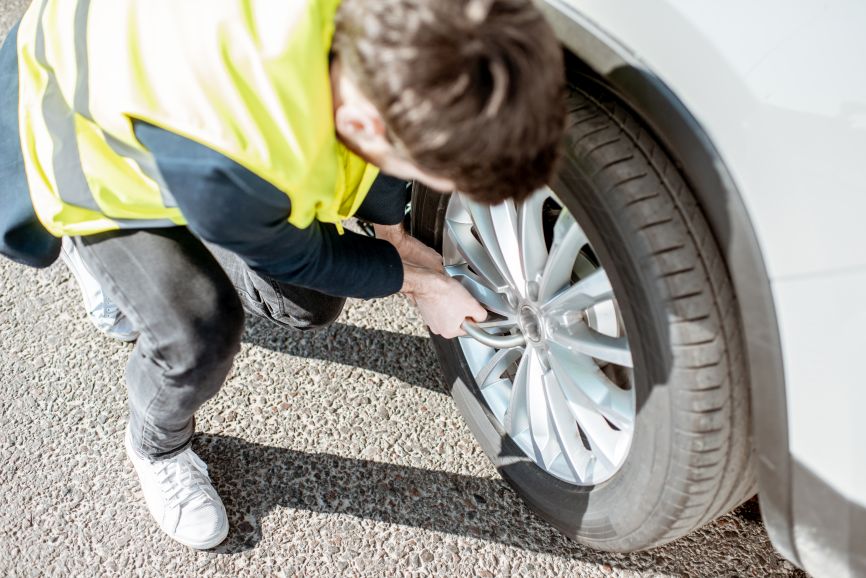
You’ve spotted a nail head sitting in your tread. The tyre might still be holding pressure, or you may have noticed it getting softer every couple of days.
Whether it can be repaired comes down to one thing more than any other: where the damage is. A small nail through the central tread is often repairable. Move that same puncture towards the shoulder or into the sidewall and a normal puncture repair is no longer allowed.
And whatever you do, don’t pull the nail out. It may be the only thing slowing the air leak.
Here’s what to do next.
Can you drive with a nail in your tyre?
If the tyre is still holding its correct pressure and there’s no obvious damage, a short, careful journey to a tyre fitter may be possible.
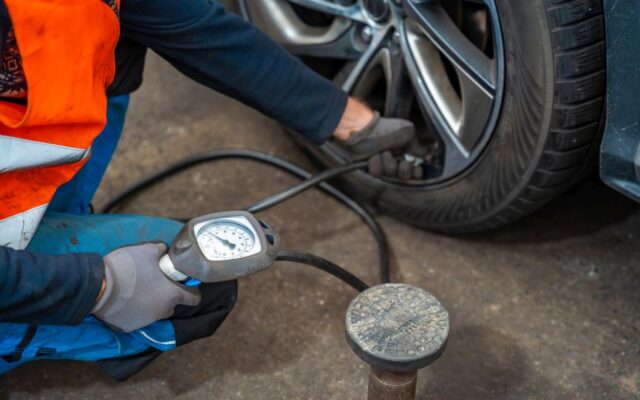
Check the pressure first. If it’s well below the pressure recommended for your car, keeps dropping quickly after inflation, looks visibly soft or is already flat, don’t drive on it.
Driving on an underinflated tyre creates extra heat and flex. That can damage the internal structure and turn what might have been a straightforward tyre puncture repair into a tyre that has to be replaced.
If the tyre is still properly inflated and you do need to travel a short distance:
- keep your speed down
- avoid hard acceleration and braking
- avoid unnecessary distance
- monitor the tyre
- go directly to a tyre specialist
A nail in a tyre doesn’t always cause an immediate flat. Sometimes the nail or screw remains tightly lodged in the hole and allows only a slow loss of pressure.
That doesn’t mean you can ignore it.
Most importantly, don’t pull it out. Removing the object can turn a slow puncture into a rapid leak and leave you with a flat tyre before you’ve reached help.
Where the puncture is decides everything
Finding the nail is only the first step. Its position tells the fitter whether a normal puncture repair is even possible.
| Where the damage is | Repairable? |
| Central tread within BS AU 159 Area T | Usually, if the hole is within the permitted size and the tyre passes inspection |
| Outer tread / shoulder | No standard minor puncture repair |
| Sidewall | No standard minor puncture repair |
| Area affected by an unacceptable previous repair | No |
| Tyre damaged internally after being driven flat | No |
A puncture through the central tread is the best-case scenario. This is the area where minor penetration repairs are permitted, provided the damage meets the other requirements.
The shoulder is different. It forms the transition between the tread and sidewall and undergoes substantial movement as the tyre rolls and corners.
The sidewall flexes continuously as the tyre carries the vehicle’s load. A nail in the tyre sidewall therefore isn’t treated like a small hole through the central tread. In normal passenger-car puncture repair work, a sidewall or shoulder penetration means replacement rather than a minor repair.
This isn’t a tyre fitter trying to sell you a new tyre. It comes from the limits set for safe tyre repairs.
What the repair standard actually says
Permanent tyre repairs in the UK should be carried out in accordance with BS AU 159G:2013, the current British Standard for repairs to tyres used on public roads.
The British Tyre Manufacturers’ Association provides a useful summary of the BS AU 159 repair rules.
For passenger-car tyres, the permitted minor-repair zone is known as Area T. It sits symmetrically around the centreline of the tyre.
Its width depends on the tyre’s nominal section width:
| Nominal tyre section width | Width of repairable Area T | Maximum penetration damage |
| Up to and including 155 mm | 60% of section width | 6 mm |
| Over 155 mm up to 200 mm | 65% | 6 mm |
| Over 200 mm | 70% | 6 mm |
The 6 mm limit is measured at the base of the injury after the puncture has been prepared for repair.
This is more precise than the common advice that the “middle three-quarters” of a tyre can be repaired. In practice, the exact repairable width depends on the tyre size.
It also explains why the centre of the tread is treated differently from the outer shoulder.
Position and hole size aren’t the only checks.
For a permanent repair, the tyre has to come off the wheel so it can be inspected internally and externally. A fitter needs to check for problems such as:
- damage caused by running underinflated or flat
- casing damage
- bead damage
- deterioration of the inner liner
- exposed cords
- cracking or significant cuts
- tread or sidewall separation
- unacceptable previous repairs
Previous puncture repairs don’t automatically condemn a tyre either. BS AU 159 allows more than one minor repair within Area T, provided the repairs themselves meet the standard and the repair patches don’t overlap.
That’s why nobody can guarantee from a photo alone that a nail puncture can be repaired. The position may look promising, but the tyre still has to pass an internal inspection.
A compliant minor repair normally uses a combination plug-patch or an internal patch together with material that fills the penetration channel. Simply pushing an external plug into a tyre that’s still fitted to the wheel isn’t the same thing.
It’s also sensible to inspect the rest of the tyre rather than concentrating only on the nail. Our guide explains how to spot tyre damage that means replacement.
For tread-depth requirements, TyreSafe explains the current UK legal minimum and how to check it.
Why roadside plug kits aren’t a permanent fix
External string and plug kits can be useful when you’re stranded.
Used according to the kit manufacturer’s instructions, a temporary repair may help you get away from an unsafe location and reach professional assistance.
But it isn’t a permanent tyre repair.
BS AU 159G specifically excludes externally inserted temporary plugs from the permanent repair standard. The biggest problem is that the tyre stays on the wheel, which means nobody has inspected its inside surface or casing.
You can’t tell from the outside whether driving with low pressure has damaged the tyre internally.
So treat a roadside plug as a get-you-home measure, not a reason to forget about the puncture.
Once you’re somewhere safe, have the tyre removed and inspected properly.
Got a nail in it and not sure whether it’s repairable? Send us a photo or ring us with roughly where it is on the tread – we’ll tell you before you drive anywhere.
Tyre sealant and why it can complicate a repair
Many newer cars carry a compressor and bottle of tyre sealant instead of a spare wheel.
Sealant is designed as a temporary mobility measure. It isn’t the same as a permanent repair under BS AU 159.
Using sealant doesn’t automatically prove that the tyre must be thrown away, but it can complicate what happens next. The fitter needs to inspect the puncture, tyre condition and any contamination inside the tyre. Some tyre or sealant manufacturers may also have specific instructions about whether a permanent repair can follow.
If you’ve used a sealant kit, tell the tyre fitter before the tyre is removed.
More importantly, follow the speed and distance restrictions printed on the mobility kit or in the vehicle handbook. If the tyre was driven severely underinflated before or after using the sealant, internal damage may make it unsuitable for repair regardless of where the original puncture occurred.
Can run-flat tyres be repaired?
Sometimes. There isn’t one universal rule for every run-flat tyre.
Whether a run-flat can be repaired depends on the tyre manufacturer, the location and size of the puncture, and what happened after the tyre lost pressure.
That last point matters. A run-flat has reinforced sidewalls that allow it to support the vehicle temporarily after pressure loss. Because it can continue to look reasonably normal, it may be difficult to judge how much stress the tyre experienced while deflated.
Manufacturer policies therefore matter.
Michelin says its run-flat tyres can generally be professionally repaired once under the same inspection and repair conditions as its conventional tyres, except for products specifically marked as non-repairable. Other manufacturers may set different restrictions.
You can read Michelin’s run-flat tyre repair guidance for an example.
If you’ve driven on a deflated run-flat, tell the fitter roughly how far you travelled. Don’t assume that because the tyre continued supporting the vehicle, it’s automatically safe to repair.
Slow punctures
A tyre that needs topping up every week or two has a fault even if you can’t see a nail.
Common causes of a slow puncture include:
- a nail or screw in the tread
- a leaking valve or valve core
- a poor seal between the tyre bead and wheel
- corrosion around the rim
- wheel damage
- a small penetration that’s difficult to see
Slow punctures are easy to ignore because the car may feel normal again after you add air.
The problem is what happens between those top-ups. Repeatedly driving with too little pressure makes the tyre flex more, generates extra heat and can damage its structure.
Incorrect pressure can also contribute to abnormal tread wear. If the tread is wearing unevenly, our guide explains what causes uneven tyre wear and where alignment or tracking may fit into the diagnosis.
If one tyre repeatedly loses air while the others remain stable, get the cause checked rather than making regular inflation your permanent solution.
What does a puncture repair cost?
For a straightforward repairable passenger-car tyre, a realistic UK garage range in 2026 is roughly £30 to £50.
That’s a general market range, not a Street Tyres price. Actual charges vary between businesses and can depend on the tyre, wheel and work required. Mobile or out-of-hours attendance may also cost more because you’re paying for the call-out as well as the tyre work.
A proper permanent puncture repair involves considerably more than pulling out the nail and plugging the visible hole.
The fitter generally needs to:
- remove the wheel
- remove the tyre from the rim
- inspect the inside and outside
- assess whether the damage falls within the permitted repair limits
- prepare the penetration
- fit the appropriate permanent repair
- refit and inflate the tyre
- check that it holds pressure
- rebalance the assembly where necessary
If the tyre is otherwise healthy, repairing it can cost a fraction of replacing it.
So don’t assume that finding a screw or nail automatically means buying another tyre. Many central-tread punctures can be repaired once they’ve been properly inspected.
When you need a new tyre instead
Sometimes replacement is the correct answer.
For ordinary passenger-car puncture work, you’ll need another tyre when:
- the penetration is outside the permitted repair area
- the nail or screw has entered the shoulder or sidewall
- the damage exceeds the minor-repair limits
- there is casing or bead damage
- the tyre has been damaged by running underinflated or flat
- an existing unsuitable repair prevents another compliant repair
- the tyre has serious cracking, cuts or separation
- the tread is already below the legal limit
- the tyre manufacturer doesn’t permit the proposed repair
Tread depth also matters from a financial point of view.
A tyre might technically have enough tread to remain legal but be close enough to replacement that paying to repair it makes little sense. Our tread-depth guide shows how to check whether the tyre has enough tread left to be worth repairing.
If replacement is the better choice, you don’t automatically need the most expensive option. Our guide to what you actually get for the money at each tier compares budget, mid-range and premium tyres.
You can also check replacement prices for your registration before deciding.
Puncture repair in Redhill
If you’ve found a nail or have a tyre that keeps losing pressure, Street Tyres can inspect the tyre and establish whether a normal permanent repair is possible.
Our workshop is at 23 Holmethorpe Avenue, Redhill, RH1 2NB.
Street Tyres also provides mobile tyre fitting across Redhill, Reigate, Horley and Merstham. That’s particularly useful when a tyre is flat or losing pressure too quickly to drive safely.
Don’t risk damaging the tyre, wheel or car just to get it to the workshop.
If you’re unsure what to do, get in touch and explain where the nail is and whether the tyre is still holding pressure.
Check prices Find the right tyres for your car Enter your registration for prices on tyres that fit. Fitting at our Redhill workshop or at your door.
FAQs
Can a nail in a tyre be repaired?
Yes. A nail through the central repairable area can often be repaired if the prepared penetration is no more than 6 mm and the tyre passes a full inspection. The repairable area varies with tyre width under BS AU 159G, so the nail’s exact position needs checking.
Can you drive with a nail in your tyre?
If the tyre is still holding its correct pressure, a short, gentle journey to a fitter may be possible. If it’s visibly soft, already flat or losing pressure quickly, don’t drive on it. Driving underinflated can damage the tyre internally and turn an otherwise repairable puncture into a replacement.
Can a sidewall puncture be repaired?
A sidewall puncture isn’t permitted as a standard minor puncture repair. The normal repairable zone for a penetration is in the central tread, not the sidewall or shoulder. For normal passenger-car tyre service, a nail or screw through the sidewall means the tyre needs replacing.
Should I pull the nail out?
No. Leave the nail or screw in place until the tyre can be assessed. It may be partly sealing the hole. Removing it can turn a slow puncture into a much quicker pressure loss and potentially leave you with a flat tyre before you’ve reached professional help.
Can a tyre be repaired after using sealant?
Possibly. Using emergency sealant doesn’t by itself tell you whether the tyre can be permanently repaired. It still needs professional inspection, and the tyre and sealant manufacturer’s instructions matter. Tell the fitter that sealant has been used and don’t exceed the mobility kit’s stated speed or distance limits.
Can run-flat tyres be repaired?
Some can, but the rules vary by manufacturer. The tyre’s condition and what happened while it was deflated are also important. Michelin, for example, permits one professional repair on eligible run-flat tyres, while other manufacturers may have different policies. Always check the specific tyre before assuming repair is possible.
Tyres in Redhill, fitted in-store or at your door Street Tyres has been fitting tyres in Redhill since 2016, rated 4.8 from 392 Google reviews. Bring your car to our Holmethorpe Avenue centre, or we will come to you across Redhill, Reigate, Horley and Merstham.