What Is Wheel Tracking on a Car?
Tracking is one of those jobs that gets mentioned at the counter, added to a quote and rarely explained properly.
Here’s the short version. Wheel tracking is the check and, where necessary, adjustment of the direction your wheels point, usually focusing on a setting called toe. When that setting is wrong, the tyres can scrub across the road instead of rolling cleanly, leading to uneven wear and sometimes affecting how the car drives.
It’s a real workshop job, but it isn’t something every car automatically needs. The useful question is whether your car is actually showing signs that its tracking is out.
What tracking actually means
When a garage talks about tracking, it normally means checking the toe setting of the wheels.
Imagine looking down at your car from directly above.
If the fronts of the wheels on the same axle sit closer together than the backs, they are pointing inwards, known as toe-in. If the fronts sit further apart than the backs, they are pointing outwards, known as toe-out.
The correct setting depends on the vehicle. Manufacturers specify how the wheels should sit, so there isn’t one universal tracking position that’s right for every car.
If the toe moves outside the correct specification, the tyres may no longer roll as cleanly as intended. Instead, they can be dragged slightly sideways as the vehicle moves forward. Over time, that scrubbing can produce feathered tread or accelerate uneven tyre wear.
Tracking can be knocked out by things such as a significant pothole or kerb impact. Wear or damage elsewhere in the steering or suspension can also affect how the wheels sit, which is one reason a technician may need to look beyond a simple adjustment if something doesn’t seem right.
Garages often use tracking and alignment interchangeably. If the terminology is causing confusion, we’ve explained the difference between tracking, alignment and balancing separately.
For the technical background, Michelin also explains toe-in and toe-out as part of its wheel-alignment guidance.
What happens during a tracking check?
If you’ve been quoted for tracking, it’s reasonable to ask what the garage is actually going to do.
Equipment and procedures vary, but the basic process is straightforward.
1. The car is positioned for measurement
The vehicle is placed on suitable alignment equipment, typically on a level alignment surface or ramp.
Accurate measurements matter because the technician is checking relatively small differences in where the wheels are pointing.
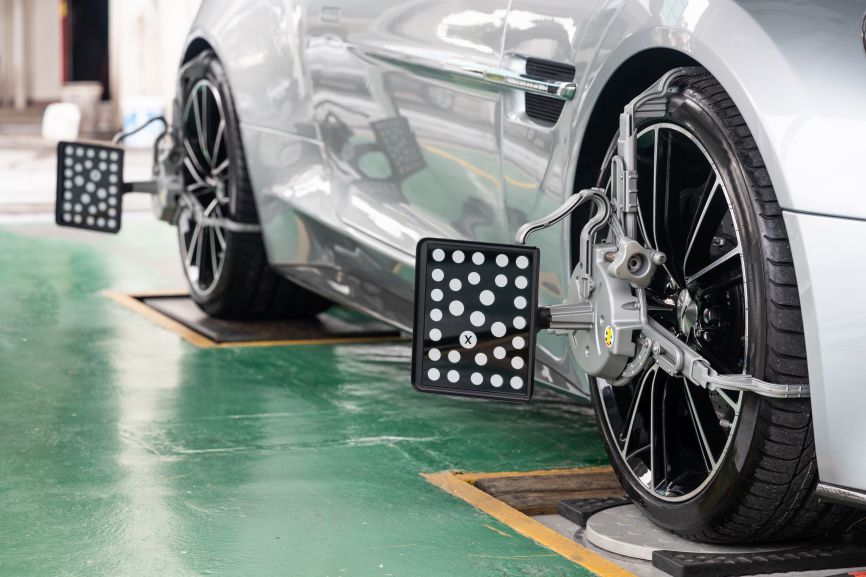
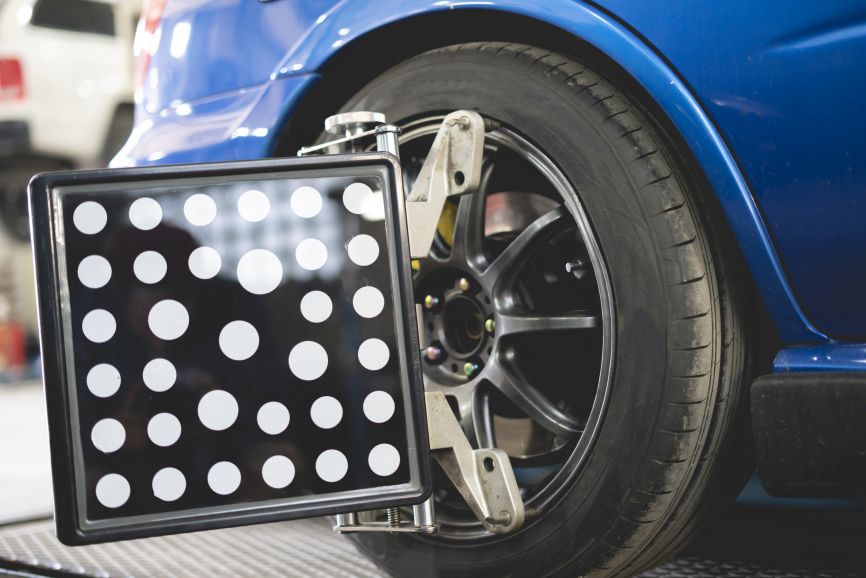
2. Sensors or targets are fitted to the wheels
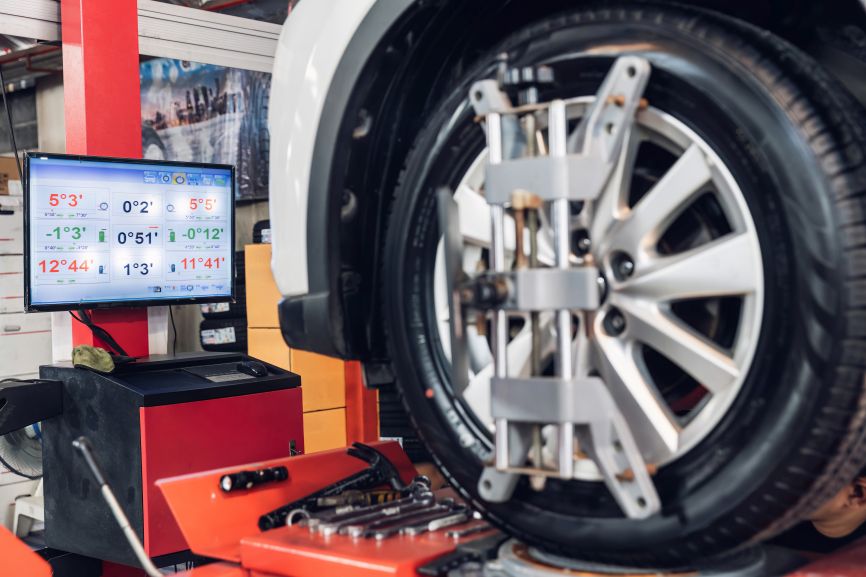
Modern alignment systems use measuring heads, sensors or targets attached to the wheels.
The equipment can then establish the position and direction of the wheels rather than relying on somebody looking at them and deciding whether they appear straight.
3. The readings are checked against the correct specification
The system measures the wheel angles and compares the results with the manufacturer’s specification for that particular vehicle.
This is an important part of the job. The target settings aren’t simply whatever looks straight, and they aren’t identical for every make and model.
4. The toe is adjusted where required
If the toe is outside specification and the vehicle allows adjustment, the technician can normally alter it through the steering linkage, commonly at the track rods.
The goal is to bring the measured setting back within the correct range for the vehicle.
5. The measurements are checked again
Once any adjustment has been made, the readings are checked again to confirm the result.
That’s what a tracking check is really doing: measuring where the wheels are pointing, comparing that with the vehicle’s specified settings and correcting the toe where necessary.
How do I know if my tracking is out?
Tracking problems often leave clues in either the way the car drives or the way its tyres wear.
Signs worth investigating include:
- The car consistently pulls towards one side on a reasonably flat, straight road.
- The steering wheel sits noticeably off-centre while you’re travelling straight.
- One side of a tyre’s tread is wearing faster than the other.
- The tread has developed a feathered or saw-tooth feel across its edges.
- The steering feels different or the car seems reluctant to hold a straight course.
Uneven tyre wear is particularly useful because it gives you something physical to inspect. If one shoulder is disappearing much faster than the rest of the tyre, our guide explains what wear on the outer edge is telling you.
You should also keep an eye on tread depth across the tyre rather than judging it from one spot. TyreSafe explains how to check tread and the legal requirements for car tyres.
A pull to one side doesn’t automatically mean the tracking is wrong, however.
Unequal tyre pressures can affect the way a car drives. The camber of the road can also encourage a vehicle towards one side. Problems such as a dragging brake, damaged tyre or worn steering or suspension component can produce similar symptoms.
So if the car suddenly starts pulling, don’t assume a tracking adjustment is guaranteed to cure it. The cause needs to be identified first.
Car pulling to one side and not sure whether it’s tracking or something else? Describe what it’s doing over the phone and we’ll tell you what’s worth checking first.
Do you need tracking when you buy new tyres?
Not automatically.
Fitting a new tyre doesn’t, by itself, mean the tracking needs adjusting.
If the tyres coming off the car have worn evenly, the steering wheel sits straight and the vehicle drives normally, there may be no reason to alter the tracking simply because you’re fitting replacements.
The situation changes if the old tyres have worn unevenly.
Say one edge of a tyre has worn down far faster than the centre or opposite edge. If incorrect wheel geometry contributed to that wear, replacing the tyre fixes the worn rubber but not the reason it wore that way.
The new tyre could then start developing the same pattern.
That’s the genuine reason a tracking check can make sense when tyres are being replaced. You’re looking for a possible cause of premature wear before it starts taking tread off the new tyres.
It shouldn’t be treated as an automatic extra on every tyre purchase.
The old tyres can actually provide useful evidence here. If their wear is even and there are no other symptoms, that’s very different from finding one shoulder badly worn while the rest still has considerably more tread.
If you’re not sure whether the tyres need changing in the first place, our guide explains how to check whether your tyres need replacing and what the UK tread-depth rules mean in practice.
When replacement is due, you can also check tyre prices for your registration.
Is tracking checked in an MOT?
No. Wheel tracking itself isn’t measured as part of the MOT test.
The tester doesn’t put the car through an alignment check to see whether its toe setting matches the manufacturer’s specification.
Tyres themselves are inspected, though.
For most passenger cars, the primary tread grooves must be at least 1.6 mm deep across the central three-quarters of the breadth of the tread and around the entire outer circumference. The MOT also covers other aspects of tyre condition and fitment.
That creates an important distinction.
Poor tracking won’t make a car fail simply because the tracking is out. But if a geometry problem has caused severe uneven tyre wear and the tyre no longer meets the MOT tread requirements, the tyre can fail.
So passing an MOT isn’t proof that your tracking is correct either. A vehicle can meet the tyre requirements on the day of the test while still developing an uneven wear pattern worth investigating.
If your tyres have already caused a problem at test time, see what happens if your car fails its MOT on tyres.
Tracking, alignment and balancing: what do they mean?
Tracking usually refers to measuring and adjusting toe. Alignment is a broader term for checking wheel geometry, while balancing deals with uneven weight in the rotating wheel and tyre assembly. If you want the terminology explained properly, read the difference between tracking, alignment and balancing.
How often should tracking be checked?
For most drivers, tracking isn’t something that needs adjusting according to a fixed calendar schedule.
It’s more useful to treat it as event-driven.
A check is sensible if you hit a kerb or a substantial pothole and notice that the steering feels different afterwards. Uneven tyre wear, a newly off-centre steering wheel or a persistent change in how the car holds a straight line are also reasons to investigate.
Tyre replacement can be another useful opportunity to look for clues, particularly when replacing a full set. Don’t just throw the old tyres away without looking at how they’ve worn.
If the wear is noticeably uneven, a tracking check may help identify why.
If the tyres have worn evenly, the car drives straight and nothing has happened that would give you reason to suspect a problem, repeatedly adjusting the tracking just because a certain amount of time has passed isn’t necessary.
The purpose of the check is to find or correct a genuine issue.
Wheel tracking in Redhill
Tracking requires specialist measuring and adjustment equipment, so it’s a workshop job rather than part of Street Tyres’ mobile tyre fitting service.
Street Tyres is based at 23 Holmethorpe Avenue, Holmethorpe, Redhill, RH1 2NB.
If you’re in Redhill, Reigate, Horley or Merstham and you’re seeing uneven tyre wear, an off-centre steering wheel or a persistent pull, get in touch and explain what the car is doing.
Street Tyres also provides mobile tyre fitting across the local area, but that service is for tyres. Tracking enquiries need to be handled at the workshop, where the required equipment is available.
Check prices Find the right tyres for your car Enter your registration for prices on tyres that fit. Fitting at our Redhill workshop or at your door.
FAQs
What is wheel tracking on a car?
Wheel tracking normally means checking and, if necessary, adjusting toe. Toe describes whether the fronts of the wheels on the same axle point slightly towards or away from each other when viewed from above. If the setting is outside the vehicle’s specification, it can contribute to uneven tyre wear and changes in how the car drives.
How do I know if my tracking is out?
Possible signs include uneven tyre wear, feathered tread, an off-centre steering wheel or a car that consistently pulls to one side. None of these proves the tracking is wrong, because tyre pressures, road camber, brakes and steering or suspension problems can produce similar symptoms. A measurement is the reliable way to check.
Is tracking the same as wheel alignment?
The terms are often used interchangeably in garages, but tracking normally refers to checking and adjusting toe. Wheel alignment can refer more broadly to wheel geometry. If you’re being quoted for either service, the useful question is what the workshop will actually measure and adjust on your car.
Does an MOT check wheel tracking?
No. The MOT doesn’t directly measure wheel tracking or compare the car’s toe with the manufacturer’s alignment specification. It does inspect tyres, including tread depth and condition. That means uneven wear caused by poor geometry can contribute to a tyre failure if the tyre no longer meets the MOT requirements.
Do I need tracking done when I get new tyres?
No, not automatically. If the old tyres wore evenly and the car drives normally, tracking may not need adjustment. If the tyres you’re replacing show significant uneven wear, having the tracking checked is sensible because fitting new rubber won’t correct the underlying geometry problem that may have caused the old tyres to wear badly.
How long does a tracking check take?
There isn’t one accurate time that applies to every vehicle. It depends on the car, the equipment being used, what the initial measurements show and whether adjustment is required or straightforward. Rather than relying on a generic time estimate, ask the workshop when booking your particular vehicle.
Tyres in Redhill, fitted in-store or at your door Street Tyres has been fitting tyres in Redhill since 2016, rated 4.8 from 392 Google reviews. Bring your car to our Holmethorpe Avenue centre, or we will come to you across Redhill, Reigate, Horley and Merstham.