All-Season Tyres in the UK – Are They Actually Worth It?
All-season tyres get sold on a simple promise: one set, all year, no swapping in October and no second set taking up space in the garage.
For a lot of UK drivers, that promise makes sense. Not because Britain gets months of heavy snow, but because we spend a large part of the year driving on cold, wet roads and only occasionally deal with serious winter weather.
For most drivers around Redhill and the South East doing ordinary annual mileage, a good set of all-season tyres can be a very sensible choice. They’re not perfect, though. Here’s who they suit, what you give up and when summer or winter tyres are still the better answer.
What an all-season tyre actually is
An all-season tyre is designed to perform across a wider range of weather conditions than a dedicated summer tyre.
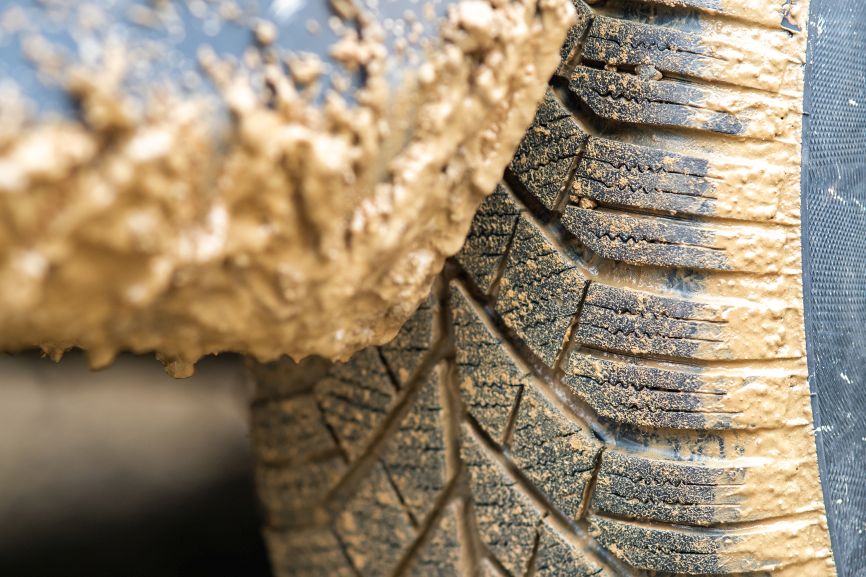
Manufacturers combine compounds intended to remain useful across changing temperatures with tread patterns containing more grooves and small cuts called sipes. These features help move water and slush away from the contact patch and provide additional biting edges in colder, slippery conditions.
The result is deliberately a compromise.
A summer tyre concentrates on mild and warm-weather road performance. A dedicated winter tyre puts far more emphasis on snow, ice and low-temperature conditions. An all-season tyre sits between them and attempts to provide useful performance across the whole year.
You’ll also see the terms “all-weather tyres” and “four-season tyres”. In UK retail, these generally refer to the same broad category.
The name itself doesn’t prove how capable a tyre is in winter, though. For that, the markings on the sidewall are much more useful.
How to spot a genuine all-season tyre
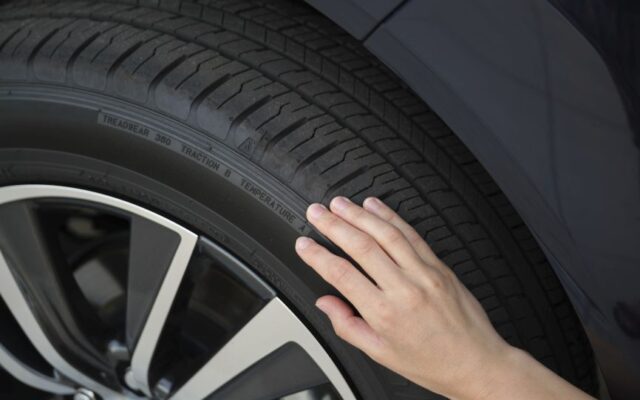
If winter capability is one of the reasons you’re buying all-season tyres, look for the three-peak mountain snowflake symbol on the sidewall.

It’s normally shortened to 3PMSF and shows a snowflake inside the outline of a three-peaked mountain.
The important part is that 3PMSF has a performance requirement behind it. To qualify for the marking, a tyre has to demonstrate a specified minimum level of snow traction through a standardised test.
You’ll often see M+S, M.S or M&S on tyres too. These markings stand for Mud and Snow.
M+S isn’t equivalent to 3PMSF. The M+S designation is based primarily on tread characteristics and manufacturer classification rather than requiring the same standardised snow-performance test used for 3PMSF certification.
So if you’re standing beside a tyre and wondering which symbol actually tells you something about tested snow capability, look for 3PMSF.
A tyre carrying only M+S shouldn’t automatically be treated as equivalent to one with the mountain-and-snowflake symbol.
That still doesn’t mean every 3PMSF tyre performs equally well. One model may be stronger in snow while another does better in wet braking or aquaplaning resistance. The symbol establishes a minimum qualifying level rather than ranking the tyre against every alternative.
The 7°C question
You’ve probably heard that summer tyres stop working properly once temperatures fall below 7°C.
That needs some context.
Seven degrees is widely used by the tyre industry as a practical rule of thumb for thinking about seasonal tyre choice. It isn’t a precise temperature at which a summer tyre suddenly becomes hard or stops gripping.
Tyre behaviour changes progressively. The compound, road surface, tyre model, moisture, temperature and driving conditions all influence performance.
Your summer tyres don’t suddenly become unsuitable when the dashboard temperature drops from 7.1°C to 6.9°C.
The number is still useful because it reminds drivers that colder weather changes what tyres have to deal with.
That’s particularly relevant in the UK, where autumn and winter often mean repeated combinations of low temperatures, rain, standing water, frost and occasional snow rather than months of consistent deep snow.
All-season tyres are designed around that broader mix of conditions.
Are all-season tyres any good in snow?
Yes, but they’re not winter tyres.
A good 3PMSF all-season tyre is designed to provide substantially more snow capability than a conventional summer tyre. That can be useful when Surrey gets an overnight snowfall, you’re travelling before roads have completely cleared or you’re dealing with cold routes where snow and slush remain around the edges.
For occasional British snow, that’s a meaningful advantage.
It doesn’t make an all-season tyre equivalent to a dedicated winter tyre.
A proper winter tyre places greater emphasis on snow, ice and demanding winter conditions. If you regularly travel through the Scottish Highlands, spend winters in mountainous parts of Europe or need to keep driving through sustained snow, a dedicated winter setup makes more sense.
For someone doing ordinary commuting around Redhill, Reigate and the wider South East, that may be more winter capability than they’ll realistically need.
What you give up with all-season tyres
Every tyre design involves compromises, and all-season tyres have more competing demands than most.
The first trade-off is warm-weather performance.
A strong summer tyre will generally have an advantage when conditions are consistently warm, particularly in dry braking, steering response and handling. Drivers of powerful or performance cars may notice that difference more than someone using a family hatchback for commuting.
At the opposite extreme, a proper winter tyre has the advantage when snow and ice become severe.
There can also be differences in refinement, wear and efficiency, but don’t assume an all-season tyre will automatically be noisier, wear faster or use more fuel. Those characteristics vary between individual models.
Some all-season tyres have excellent longevity. Others sacrifice more wear performance to achieve grip across a broader range of conditions. The same applies to rolling resistance and road noise.
That’s why buying by category alone doesn’t work particularly well.
The real question is whether the overall compromise suits your driving.
Someone covering modest mileage around Surrey, commuting throughout the year and unable or unwilling to store a second tyre set may gain far more from the winter versatility than they lose in summer performance.
A driver who spends summer weekends exploiting a high-performance car or regularly drives through severe snow has a stronger case for dedicated seasonal tyres.
Not sure whether all-seasons make sense for the miles you actually do? Ring us and we’ll talk it through honestly – sometimes the answer is stick with what you’ve got.

All-season vs summer tyres
Summer tyres remain a perfectly reasonable choice in the UK, particularly for drivers who can avoid using the car when winter conditions become difficult.
The difference is that an all-season tyre gives up some warm-weather specialisation in return for stronger capability when the weather becomes colder or snowy.
| Condition | Summer tyre | All-season tyre |
| Warm dry roads | Better | Good |
| Warm wet roads | Generally very good | Good |
| Cold wet roads | Less winter-focused | Better suited |
| Light snow and slush | Poor | Usable |
| Ice and deep snow | Poor | Limited |
| Tread life in sustained heat | Often an advantage | Model dependent |
| Noise | Model dependent | Model dependent |
The important word is “compromise”.
For a driver who rarely encounters snow and values maximum summer handling, a good summer tyre still makes sense. For somebody who wants one set capable of coping with typical British weather throughout the year, an all-season can be more practical.
All-season vs winter tyres
If snow and ice performance are the priorities, winter tyres are the stronger choice.
Their tread patterns, compounds and siping are designed more specifically around demanding winter conditions. An all-season tyre can’t duplicate all of that without sacrificing too much performance elsewhere.
The all-season advantage is convenience.
There’s no second seasonal set to buy, nowhere to find space for four spare tyres or wheels, and no need to arrange two tyre changes every year.
Winter tyres are not a general legal requirement for cars in the UK. That means the decision is mainly about the weather and roads you actually encounter rather than a nationwide seasonal fitting rule.
If your winters are mostly Surrey rain, frost and occasional snow rather than months of snow-covered roads, all-seasons often make more practical sense.
Do all-season tyres wear out faster?
Not necessarily.
You’ll often hear that all-season tyres wear faster because their compounds have to retain useful flexibility in colder conditions. In practice, tread life is too dependent on the individual tyre to make that a universal rule.
Some all-season tyres perform very well for longevity. Others may wear more quickly under sustained hot-weather driving.
Vehicle weight, tyre pressure, wheel alignment, driving style, road surfaces and mileage can make just as much difference.
There’s another complication when comparing them with separate summer and winter sets. If you own two sets, each spends several months of the year unused, so naturally the mileage is split between them. One all-season set covers everything.
Whatever type you fit, keep an eye on tread depth and condition.
For most UK passenger cars, the legal minimum is 1.6mm across the central three-quarters of the tread and around the entire circumference.
Our guide explains the legal tread depth and how to check it, while TyreSafe also provides guidance on measuring tread correctly.
Can you fit all-season tyres to the front only?
If you’re switching your car from summer tyres to all-seasons, a matching set of four is the right approach.
Putting one seasonal tyre type on the front and another on the rear gives the two axles different grip characteristics.
That difference matters most when conditions become difficult, which is exactly when you bought the all-season tyres to help.
Hard braking, emergency manoeuvres, wet corners or snow can expose differences between front and rear grip and alter how the vehicle responds when it reaches the limit.
The safest approach is consistent tyre characteristics across the car, subject to the sizes, ratings and other requirements specified by the vehicle manufacturer.
Four-wheel-drive vehicles can have additional requirements relating to tyre size, tread depth and circumference, making the manufacturer’s instructions particularly important.
What do all-season tyres cost?
All-season tyres exist at budget, mid-range and premium levels, although many of the best-known products sit towards the middle and upper end of the market.
There’s no meaningful single UK price because tyre size matters enormously.
A common 15 or 16-inch hatchback tyre can cost far less than a large SUV tyre, even where both carry the same brand and model name. Speed rating, load rating, reinforced construction and run-flat technology can also change the price considerably.
Rather than working from a generic national price range, compare like for like in your actual tyre size.
Our guide to what you actually get for the money at each tier explains the differences between budget, mid-range and premium products in more detail.
Budget all-seasons also exist, including options from brands such as Riken.
Price deserves some extra thought with an all-season tyre because you’re asking one product to cover dry roads, heavy rain, low temperatures and some snow. Achieving reasonable performance across all of those areas isn’t a simple design problem.
If cost is the deciding factor, read our guide to which budget tyre brands are worth buying rather than choosing purely by whichever listing is cheapest.
Which all-season tyres are worth looking at?
There’s no single all-season tyre that should automatically be called the best.
Different independent tests produce different winners depending on tyre size, test conditions and the importance placed on dry, wet, snow, wear and efficiency performance.
Michelin’s CrossClimate 2 is one of the most recognised products in the category. Michelin currently identifies the tyre as an all-season product carrying both the 3PMSF and M+S markings and describes it as certified for winter driving.
For suitable SUVs, there’s also the CrossClimate 2 SUV, while the earlier CrossClimate+ remains available in selected sizes.
Continental’s AllSeasonContact is another established all-season product available through Street Tyres.
The Nexen N’blue 4Season gives drivers another option from a recognised mid-range manufacturer.
The badge on the sidewall shouldn’t make the decision on its own. Our guide to where each tyre brand sits and who owns it provides more context on the wider market.
Then look at independent comparison testing.
Tyre Reviews publishes tests that compare all-season products across areas such as dry braking, wet handling, aquaplaning and snow performance. Some tests also include summer and winter reference tyres, which is particularly useful because it shows exactly where the compromise lies.
Driving abroad in winter
This is where the markings on an all-season tyre can become more than a UK buying consideration.
European winter-equipment laws aren’t uniform. Requirements vary by country and can also depend on the season, region, road signs or actual weather conditions.
France is one example. Current GOV.UK travel guidance says vehicles used in certain French mountain regions between 1 November and 31 March must have the required winter equipment, which may mean suitable winter tyres or chains depending on the circumstances and current local rules.
Other European countries have their own requirements, including rules triggered by snow, ice or other winter road conditions.
A 3PMSF-marked all-season tyre can satisfy winter-tyre requirements in some destinations where an M+S-only product no longer does, but don’t turn that into a blanket rule for Europe.
Check each country separately.
Before travelling, use the current GOV.UK driving abroad guidance and follow the official travel advice for every country on your route. Regulations can change, and some countries impose additional requirements for chains, tread depth or winter equipment.
It’s also sensible to check your insurance policy and overseas cover before travelling rather than assuming every insurer handles seasonal tyre use in exactly the same way.
All-season tyres in Redhill
For the sort of winter we normally see around Surrey, all-season tyres have a strong practical case.
Take someone doing around 8,000 miles a year between Redhill, Reigate, Horley and Merstham.
They may spend months driving through cold rain, wet morning commutes and occasional frost, yet encounter only a handful of days with meaningful snow. For that driver, owning a dedicated set of winter tyres may be difficult to justify.
A good all-season set gives them more winter capability than ordinary summer tyres without creating the storage and seasonal-swapping problem of two complete sets.
That doesn’t mean everybody in Surrey needs them. If you barely use the car during bad winter weather, a good summer tyre may remain entirely suitable.
Street Tyres can supply and fit all-season options at Holmethorpe Avenue, with mobile fitting available across the surrounding area.
If you’re making the switch, fit a suitable set of four rather than creating a mixed summer/all-season setup.
You can check all-season options for your registration to see products available in the correct size for your car.
Check prices Find the right tyres for your car Enter your registration for prices on tyres that fit. Fitting at our Redhill workshop or at your door.
FAQs
Are all-season tyres worth it in the UK?
For many UK drivers, yes. They make particular sense if you encounter plenty of cold and wet weather but only occasional snow and don’t want to own two seasonal tyre sets. Drivers who regularly face deep snow, prolonged ice or demanding mountain conditions are better served by dedicated winter tyres.
Are all-season tyres the same as all-weather tyres?
Generally, yes. In UK retail, “all-season”, “all-weather” and “four-season” commonly describe the same broad tyre category. Don’t rely on the name alone, though. If tested snow capability matters, look for the three-peak mountain snowflake, or 3PMSF, marking on the tyre’s sidewall.
Are all-season tyres good in snow?
A good 3PMSF all-season tyre is designed to provide better snow capability than a conventional summer tyre and can be suitable for occasional UK snowfall. It still won’t match a dedicated winter tyre in deeper snow, persistent ice or severe winter conditions.
Do all-season tyres wear out faster?
Not automatically. Wear varies significantly between models and depends on factors including vehicle weight, alignment, tyre pressures, mileage, driving style and temperature. Some all-season tyres may wear faster under sustained hot-weather use, while others have very competitive tread life.
Can I fit all-season tyres on the front only?
If you’re moving from summer tyres to all-seasons, fit a suitable matching set of four. Mixing seasonal tyre types between the front and rear axles creates different grip characteristics, which can affect the car’s behaviour during braking, cornering or a loss of traction.
Are winter tyres a legal requirement in the UK?
No. There is no general UK law requiring cars to use winter tyres during a particular season. Your tyres must still comply with normal UK roadworthiness and tread requirements. Different winter-equipment laws apply in parts of Europe, so check official guidance before travelling abroad.
Tyres in Redhill, fitted in-store or at your door Street Tyres has been fitting tyres in Redhill since 2016, rated 4.8 from 392 Google reviews. Bring your car to our Holmethorpe Avenue centre, or we will come to you across Redhill, Reigate, Horley and Merstham.