Run Flat Tyres Explained: What They Are and What to Do When One Goes Flat
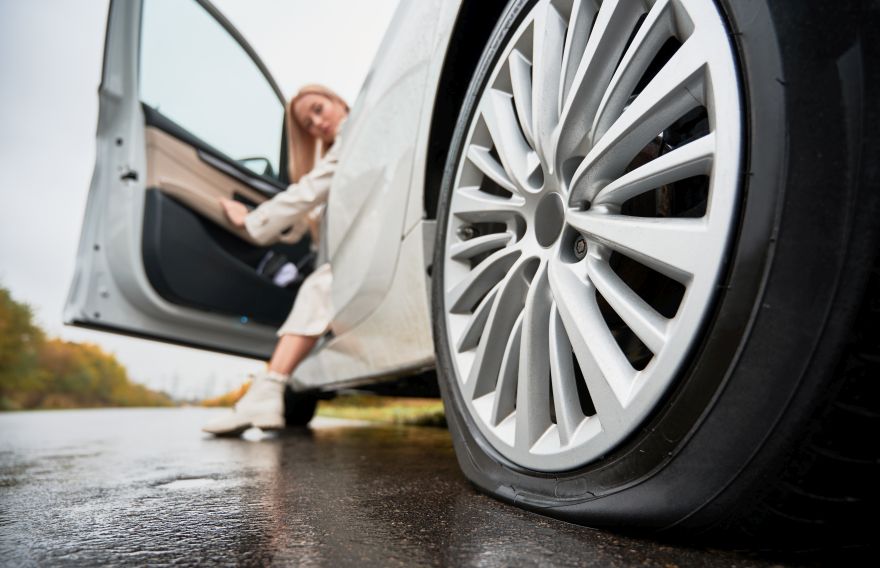
If you’ve found a flat tyre on a car with no spare wheel in the boot, there’s a chance you’ve got run flats. They’re designed to let you continue driving for a short distance after losing tyre pressure, but that doesn’t mean you should keep driving unnecessarily.
The catch is that driving while deflated can turn a potentially repairable puncture into a tyre that needs replacing.
Here’s how to identify run flat tyres, find out whether a puncture can be repaired, and decide if switching to normal tyres makes sense for your car.
What Are Run Flat Tyres?
Run flat tyres are specially constructed tyres that can support a vehicle for a limited distance after losing inflation pressure.
Unlike a conventional tyre, which can collapse when air escapes, a self-supporting run flat has reinforced sidewalls that help it retain its shape.
This doesn’t make run flat tyres puncture-proof. Nails, screws, road debris and pothole impacts can still cause damage.
Their main advantage is that a puncture doesn’t necessarily leave you stranded immediately.
How Far Can You Drive on Run Flat Tyres?
Many run flat tyres allow you to travel roughly 50 miles at a maximum speed of 50mph after pressure loss.
Michelin, for example, specifies up to 80km at up to 80km/h for its run flat tyres. However, the actual distance depends on the tyre design, vehicle load, road conditions and temperature.
These figures are maximum limits, not guaranteed distances.
You should always follow the restrictions provided by your tyre and vehicle manufacturers.
For more detail, see Michelin’s explanation of run flat tyres.
If your pressure warning appears, reduce your speed safely and arrange for the tyre to be checked. Don’t use the remaining emergency driving distance unless necessary.
How Do Run Flat Tyres Work?
Most passenger-car run flat tyres use self-supporting technology.
Their reinforced sidewalls help carry the vehicle’s weight when normal air pressure has been lost.
In an ordinary tyre, air pressure provides much of the support needed to maintain its shape. Without sufficient pressure, the sidewalls deform significantly under the vehicle’s weight.
A self-supporting run flat has stronger sidewall reinforcement to limit that deformation temporarily.
The construction helps maintain some vehicle mobility after a puncture, but it doesn’t prevent internal damage from developing during prolonged driving without sufficient pressure.
Run Flat Tyres vs Self-Sealing Tyres
Run flat and self-sealing tyres are often confused, but they work differently.
| Feature | Run flat tyres | Self-sealing tyres |
| Main technology | Reinforced sidewalls | Internal sealant layer |
| Main purpose | Limited driving after pressure loss | Seal certain small punctures |
| Supports the vehicle without air? | Temporarily, within specified limits | Not unless also designed as a run flat |
| Does it prevent punctures? | No | No, but it may seal certain punctures |
| Needs professional inspection after damage? | Yes | Yes, when damage or pressure loss is suspected |
Self-sealing tyres use a sealant layer inside the tread area to close certain punctures automatically.
Continental ContiSeal and Michelin Selfseal are examples.
These technologies can help retain pressure after a small tread puncture, but they don’t provide the same emergency driving capability as self-supporting run flats.
A tyre advertised as self-sealing shouldn’t be assumed to be run flat.
Why Run Flat Tyres Need TPMS
Vehicles using self-supporting run flat tyres need an operational tyre pressure monitoring system (TPMS).
Because the reinforced sidewalls can maintain the tyre’s shape after pressure loss, you may not notice the usual signs of a puncture immediately.
TPMS alerts you when tyre pressure drops, giving you an opportunity to respond before exceeding the tyre’s emergency driving limits.
If a warning appears, our guide explains what the tyre pressure warning light is telling you.
Ignoring that warning can result in further tyre damage, even when the car still feels reasonably normal to drive.
How to Tell If You’ve Got Run Flat Tyres
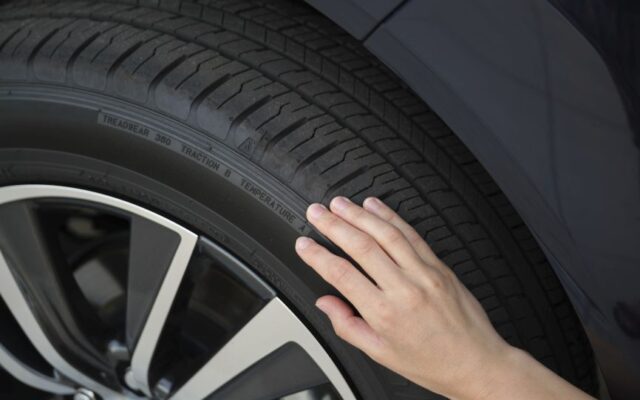
The most reliable way to identify run flat tyres is to check the markings on their sidewalls.
You can also consult your vehicle handbook or original tyre specifications.
A missing spare wheel is another clue, although it isn’t conclusive. Some cars are supplied with conventional tyres and an emergency inflation kit instead.
Common Run Flat Tyre Symbols and Markings
Different manufacturers use different markings to identify run-flat technology.
| Marking | Manufacturer | Meaning |
| RFT | Bridgestone | Run-Flat Technology |
| ZP | Michelin | Zero Pressure |
| EMT | Michelin; older Goodyear products | Extended Mobility Tyre / Technology |
| SSR | Continental | Self Supporting Runflat |
| ROF | Goodyear | RunOnFlat |
| HRS | Hankook | Hankook Runflat System |
These markings are supported by manufacturer documentation, although the exact wording and symbols can differ between tyre models.
You may also encounter other original-equipment or older run-flat markings. If you’re uncertain, ask a tyre technician to identify the tyre rather than relying on an unfamiliar abbreviation.
A BMW or Mini supplied with run flats, for example, may have had its tyres changed by a previous owner. The vehicle model alone doesn’t establish what’s currently fitted.
For help with the remaining sidewall information, read what the rest of the numbers on your sidewall mean.
Can You Repair a Run Flat Tyre?
Some run flat tyres can be repaired by a professional, but others must be replaced. The answer depends on the manufacturer’s instructions, the puncture and whether the tyre has suffered damage while deflated.
A blanket claim that run flats can never be repaired isn’t accurate.
However, neither is the claim that they can always be repaired.
Why Some Run Flat Tyres Can Be Repaired
Michelin allows one professional repair on eligible run flat tyres, subject to its inspection requirements.
Tyres whose sidewalls explicitly prohibit repair are excluded.
Other manufacturers take a more restrictive approach.
For example, Continental’s published SSR guidance does not permit tyre repairs, while its general tyre-repair advice identifies structural damage and run-flat damage as reasons a tyre cannot be repaired.
This is why the manufacturer’s policy matters just as much as the location of the puncture.
A repair that might be permitted on one brand of run flat may not be permitted on another.
Why Driving on a Flat Run Flat Can Make Repair Impossible
The biggest complication is what happens after the tyre loses pressure.
Although reinforced sidewalls support the vehicle temporarily, they still experience substantial stress while operating without normal inflation pressure.
As the tyre flexes under load, heat and structural damage can develop internally.
The outside of the tyre may continue looking reasonably normal, making that damage difficult to recognise.
Continental’s guidance on when a tyre is beyond repair identifies run-flat damage as a reason for replacement.
TyreSafe also advises caution because damage caused by driving deflated may be hidden by the tyre’s reinforced construction.
In fact, TyreSafe generally recommends against repairing run flat tyres while acknowledging that individual manufacturers may issue different instructions.
This distinction is important.
A tyre that lost pressure but wasn’t driven while deflated may have a different repair assessment from one that was driven several miles after a puncture.
Even so, not driving on it doesn’t automatically guarantee repairability.
What Should You Do After a Run Flat Puncture?
If you suspect a puncture:
- Reduce speed safely and avoid unnecessary driving.
- Check the manufacturer’s emergency driving limits.
- Contact a tyre specialist for advice.
- Have the tyre removed and inspected where repair is being considered.
- Follow the tyre manufacturer’s repair policy and the technician’s assessment.
Don’t assume that a tyre can be repaired simply because the puncture looks small.
A professional needs to assess its condition and establish whether a repair is permitted.
For the general repair requirements that also apply to conventional tyres, see when a puncture can be repaired and when it can’t.
You can also consult TyreSafe’s guidance on punctures and puncture repairs.
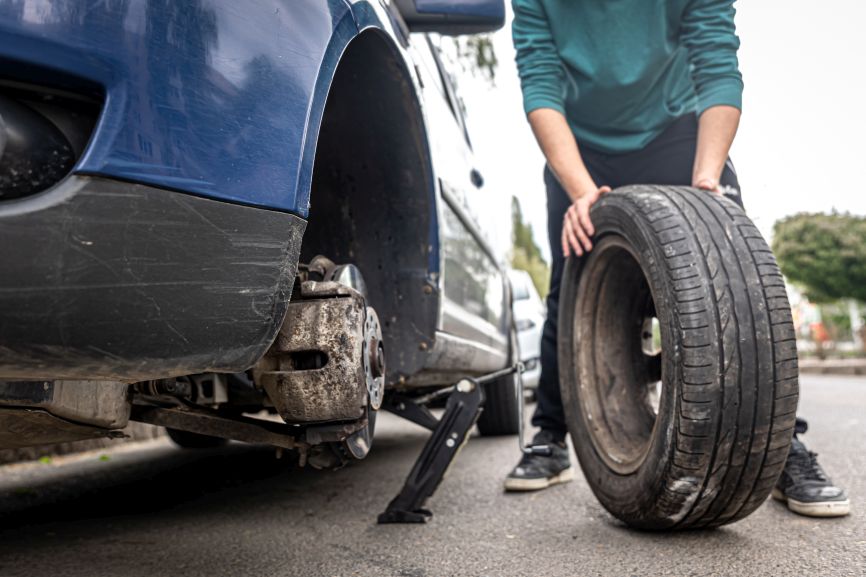
Got a flat run flat and no spare in the boot? Call us before you drive it anywhere. We’ll tell you whether it’s worth inspecting for a repair, and we can come to you if the car’s already sitting on it.
Can You Replace Run Flats With Normal Tyres?
Yes, switching from run flat tyres to conventional tyres is possible on many vehicles, provided the replacement tyres and wheels are suitable and the vehicle manufacturer’s requirements are met.
However, it isn’t appropriate to assume every vehicle originally supplied with run flats can make the change without further checks.
Wheel compatibility, vehicle specifications, suspension characteristics and tyre load and speed ratings all matter.
What You Gain by Switching to Normal Tyres
A potentially softer ride
Run flats generally have reinforced sidewalls, which can make the ride feel firmer.
Conventional tyres may offer greater comfort over bumps and uneven surfaces, although the result depends on the vehicle, tyre model and wheel size.
More tyre choices
There are generally more conventional tyre models available in a given size.
That provides greater flexibility when choosing between comfort-focused, performance-oriented and budget-friendly options.
Potentially lower costs
Run flat tyres are often more expensive than comparable conventional tyres.
Switching may reduce replacement costs, although prices vary significantly between manufacturers and models.
You shouldn’t assume conventional tyres always last longer. Both types are affected by alignment, inflation pressure, driving habits and road conditions.
What You Lose by Switching
The main disadvantage is losing the ability to continue driving for a limited distance after a puncture.
Many vehicles originally supplied with run flats don’t have a spare wheel or jack.
If you replace the run flats with conventional tyres and don’t arrange another puncture solution, the car could be left stationary when a tyre goes flat.
That can be particularly inconvenient during long journeys or when travelling outside normal workshop hours.
Before switching, consider how you would handle a puncture when you’re away from home.
Will TPMS Still Work With Normal Tyres?
Yes, a compatible and properly functioning tyre pressure monitoring system will continue working with conventional tyres.
TPMS isn’t exclusive to run-flat technology.
Depending on your vehicle, its system may need to be reset, recalibrated or checked after tyre replacement.
The correct inflation pressures should also be confirmed for the new fitment.
What About Mobile Tyre Fitting?
For a vehicle without a spare wheel, mobile tyre fitting is a practical way to deal with a puncture that prevents you from driving.
Instead of relying on the limited emergency mobility of run flats, you arrange for a suitable replacement tyre to be fitted where the vehicle is parked, subject to safe access and availability.
Roadside assistance or a compatible spare-wheel solution may also be appropriate.
The important thing is having a plan before you experience a puncture.
If you’re considering the change, you can look up tyres for your registration and have the proposed fitment checked.
Can You Mix Run Flat Tyres With Normal Tyres?
No. Mixing self-supporting run flat tyres and conventional tyres on the same vehicle is strongly discouraged by tyre manufacturers and TyreSafe.
The two types have different construction and handling characteristics.
Their responses to steering inputs, cornering forces and changes in inflation pressure may differ.
Mixing them can create unpredictable handling behaviour, especially during emergency manoeuvres.
If you’re switching to conventional tyres and the vehicle manufacturer permits the change, replace all four tyres with a compatible set.
Are Run Flat Tyres Worth It?
Run flat tyres are worth considering if being able to continue driving after a puncture is particularly valuable to you.
That might be the case if you regularly drive on motorways, travel alone or make long journeys.
However, the additional convenience comes with trade-offs.
| Run flat tyres | Conventional tyres |
| Limited emergency mobility after pressure loss | Normally need to stop when punctured |
| Often more expensive | Often more affordable |
| Generally fewer model choices | Wider selection |
| Can produce a firmer ride | Often more compliant |
| Manufacturer-specific repair restrictions | Conventional repair assessment applies |
| May eliminate the need for a spare | Need an alternative puncture plan if no spare is carried |
When Run Flats Make Sense
Run flats can be useful when reaching a safer stopping place after a puncture is a priority.
They may also suit drivers who prefer not to change a wheel at the roadside.
However, continuing to drive is only appropriate within the manufacturer’s restrictions and when the vehicle remains safe to control.
When Normal Tyres May Be Better
Conventional tyres may appeal to drivers who prioritise comfort, price and a wider selection of products.
They can be a suitable alternative where the vehicle manufacturer allows the change and the owner has a practical plan for punctures.
If price is a deciding factor, compare what you actually get moving up the price tiers and how tyre brands are tiered.
The right choice depends on your vehicle, driving habits and how much you value the ability to keep moving after pressure loss.
How Long Do Run Flat Tyres Last?
Run flat tyres don’t have a single fixed lifespan.
Their service life depends on tread wear, driving conditions, inflation pressure, wheel alignment, age and the individual tyre model.
A run flat that’s been driven while deflated also needs special assessment, regardless of how much tread remains.
For a broader explanation of tyre replacement intervals, read how long a set of tyres actually lasts.
Run Flat Punctures in Redhill and the Surrounding Area
If you’ve experienced a puncture in Redhill, Reigate, Horley or Merstham, the next step depends on the tyre’s condition and whether it’s safe to continue driving.
Street Tyres offers tyre services from Holmethorpe Avenue in Redhill, with mobile tyre fitting available across the surrounding area.
If a run flat has been driven while deflated, it may need replacing rather than repairing.
And if you’ve switched to conventional tyres on a car without a spare, mobile fitting can help when a puncture leaves the vehicle stationary.
The important thing is to avoid unnecessary driving on a potentially damaged tyre.
For advice about a puncture or replacement options, get in touch with Street Tyres.
Check prices Find the right tyres for your car Enter your registration for prices on tyres that fit. Fitting at our Redhill workshop or at your door.
Frequently Asked Questions About Run Flat Tyres
Can a Run Flat Tyre Be Repaired?
Some run flat tyres can be repaired, but manufacturer policies differ. Michelin permits one professional repair on eligible tyres, while other manufacturers may prohibit repairs. The tyre’s condition and whether it was driven while deflated are also important. A professional inspection is necessary before deciding whether repair is possible.
How Far Can You Drive on a Flat Run Flat Tyre?
Many run flats allow approximately 50 miles at a maximum of 50mph after pressure loss. However, these limits vary by tyre manufacturer, vehicle load and driving conditions. Always follow the vehicle and tyre manufacturers’ instructions, and arrange inspection as soon as possible rather than treating the maximum distance as a target.
How Do I Know If My Car Has Run Flat Tyres?
Check the tyre sidewall for markings such as RFT, ZP, EMT, SSR, ROF or HRS. The exact marking depends on the manufacturer. Your vehicle handbook can also help identify the original tyre specification. Having no spare wheel is a clue, but it doesn’t confirm that run flats are fitted.
Can I Fit Normal Tyres Instead of Run Flats?
Many vehicles can use conventional tyres instead of run flats, but compatibility must be confirmed first. Check the vehicle manufacturer’s instructions, wheel requirements, tyre size and load and speed ratings. If you switch, remember that a puncture may leave you stranded unless you’ve arranged a spare or roadside assistance.
Can You Mix Run Flat and Normal Tyres?
Mixing run flats and conventional tyres is strongly discouraged because their construction and handling characteristics differ. Tyre manufacturers and TyreSafe recommend avoiding this combination. If you’re changing to conventional tyres and your vehicle is suitable, a complete compatible set is generally the appropriate choice.
Are Run Flat Tyres More Expensive?
Run flat tyres are generally more expensive than comparable conventional tyres because of their specialised construction. Prices depend on the brand, size and model. They may also be more expensive to replace after a puncture if the tyre manufacturer prohibits repairs or internal damage makes repair unsafe.
Tyres in Redhill, fitted in-store or at your door Street Tyres has been fitting tyres in Redhill since 2016, rated 4.8 from 392 Google reviews. Bring your car to our Holmethorpe Avenue centre, or we will come to you across Redhill, Reigate, Horley and Merstham.