How Long Do Tyres Last? Mileage, Age and When to Replace Them
The honest answer is that tyres can last anywhere from a few years to ten years or more, which isn’t very useful on its own. Mileage isn’t much better as a single answer.
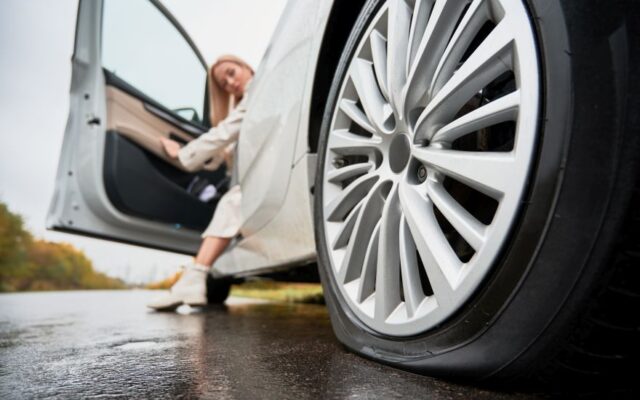
A tyre finishes in one of three ways. The tread wears down, the rubber ages, or something damages it badly enough to end its useful life early. Whichever happens first decides when that tyre needs replacing.
Most drivers replace tyres because they’ve worn out. But if you only cover four or five thousand miles a year, yours could get old while the tread still looks surprisingly healthy. That’s the part that’s easy to miss.
The Short Answer
For many everyday cars, around 20,000 to 30,000 miles is a reasonable rough range to have in mind for tyre life, but it is not a replacement interval or guarantee. Some tyres will wear out much sooner, while others can cover considerably more.
Age matters independently of mileage. There is no universal expiry date for ordinary car tyres, although some tyre manufacturers recommend that car and van tyres over ten years old are withdrawn from service.
The useful rule is simple: wear, age or damage. Whichever comes first wins.
UK car tyres must also have at least 1.6mm of tread across the central three-quarters of the breadth of the tyre and around the entire circumference. Rather than repeating the measurement process here, our guide explains how tread depth is measured and what the limit means.
How Many Miles Do Tyres Last?
There is no fixed mileage at which a car tyre must be replaced.
Around 20,000 to 30,000 miles is useful as a broad expectation for many drivers, but the actual result can vary dramatically. Position on the car, tyre pressure, wheel alignment, driving style, road conditions and tyre design can all change how quickly the tread wears.
Front and Rear Tyres Don’t Necessarily Wear Together
Which end of the car a tyre is fitted to can make a big difference.
On a front-wheel-drive car, the front tyres have several jobs at once. They transmit drive to the road, handle steering and deal with a large share of the braking forces. Because of that extra workload, the front tyres will commonly wear faster than the rears.
This is one reason drivers often replace tyres in pairs rather than changing all four together. Four tyres fitted at the same time do not automatically reach the end of their useful lives at the same time.
Slower rear wear can bring another issue, though. The rear tyres may stay on the vehicle for much longer, which makes their age more important even if they still have plenty of tread.
Incorrect Pressure Can Shorten Tyre Life
Tyres should be inflated to the pressures specified by the vehicle manufacturer for the vehicle and load.
Under-inflation increases flexing and heat build-up and can contribute to increased shoulder wear. Incorrect tyre pressure can also affect handling, fuel consumption and overall tyre life.
If you’re regularly losing pressure, don’t simply keep topping the tyre up. Find out what the tyre pressure warning light is telling you and have repeated pressure loss investigated.
Bad Alignment Can Ruin a Tyre Early
A tyre can still have healthy tread through the middle while one shoulder is already badly worn.
Incorrect wheel alignment can create rapid and uneven tyre wear. In a severe case, a relatively new tyre can lose a large amount of usable tread much sooner than expected.
If the terminology gets confusing, our guide explains the difference between tracking, alignment and balancing.
It is also worth understanding why tyres wear on the outside edge if one shoulder is disappearing much faster than the rest of the tread.
Driving Style and Road Conditions Matter
Motorway driving can be relatively gentle on tyres because the vehicle spends long periods travelling in a straight line at a steady speed.
Urban driving involves more steering, braking and acceleration. Roundabouts, junctions, speed bumps and repeated changes of direction all put more work through the tyres.
Hard acceleration and heavy braking can increase wear further. Rough road surfaces, potholes and repeated kerb contact can also damage tyres or shorten their usable life.
The Tyre Itself Matters Too
Different tyres are designed around different priorities.
Some use compounds and tread designs intended to prioritise grip and performance. Others place greater emphasis on longevity, comfort or efficiency.
A tyre offering high levels of grip may not necessarily deliver the greatest possible mileage.
This is not simply a budget-versus-premium issue either. Different models from the same manufacturer can be designed for different uses, so purchase price alone cannot tell you how many miles a tyre will last.
How Long Do Tyres Last in Years?
Tyres continue to age even when a car covers very little mileage.
That makes tyre age especially important for low-mileage drivers. A car covering only 4,000 miles each year could still have a healthy-looking amount of tread after many years, but the rubber has spent all that time exposed to environmental and operating conditions.
Tyre ageing is not simply the passage of time. Exposure to ultraviolet light and ozone can degrade rubber, while heat and operating conditions also play a part.
Tyre manufacturers use additives to help protect the rubber. Normal flexing while the tyre is used helps those protective substances move towards the tyre’s surface. On vehicles used infrequently, that process is reduced, which can make the tyres more susceptible to some ageing effects.
That means a tyre with deep tread is not automatically a healthy tyre.
Look for cracking or crazing around the sidewall and tread grooves. Our guide explains which tyre cracking is dangerous and which isn’t.
Cars left standing for long periods can develop other tyre problems as well. Incorrect pressure while stationary can contribute to deformation, while long periods in one position may lead to flat spotting.
Outdoor storage can also increase exposure to sunlight and weather.
And don’t forget the spare.
A spare wheel can easily carry one of the oldest tyres on the vehicle because it may sit unused for years. Check its age, condition and pressure rather than assuming an unused tyre must be safe.
How to Check How Old Your Tyres Are
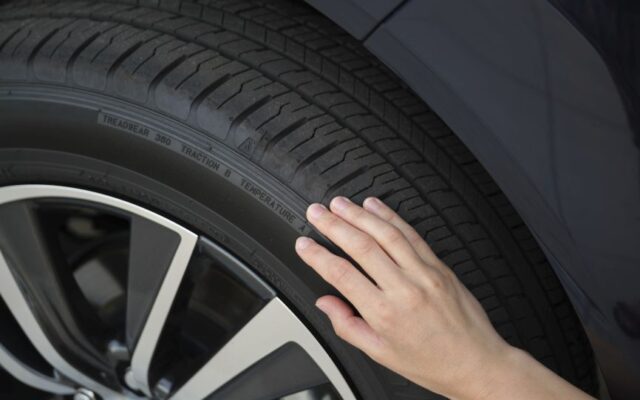
Look for the four-digit manufacture date code on the tyre sidewall.
The first two digits show the week of manufacture. The final two show the year.
For example, 2120 means the tyre was manufactured during week 21 of 2020.
You do not need to convert the week number into an exact production date. Week 21 falls around May, so thinking of that example as roughly May 2020 is normally enough when assessing the tyre’s age.
The date code forms part of the markings on the sidewall and may appear after other letters or numbers.
It is also possible for the complete date marking to appear on only one side of the tyre. If you cannot see the four-digit code on the outward-facing sidewall, it may be on the inner face.
That can make it difficult to inspect with the wheel fitted. If you cannot find it safely, ask a tyre fitter to locate the code rather than crawling underneath the vehicle.
The sidewall contains plenty of other useful information as well, including tyre size, load index and speed rating. Our separate guide explains what the rest of the numbers on your sidewall mean.
Found the four digits and not sure what they’re telling you? Read them out to us over the phone and we’ll tell you how old your tyres are and whether it matters yet.
Is There a Legal Limit on Tyre Age in the UK?
There is no general legal maximum age for ordinary car tyres in Great Britain.
This matters because the ten-year figure is sometimes presented as though every car tyre becomes illegal on its tenth birthday. It doesn’t.
There are specific tyre-age restrictions for certain heavier and passenger-carrying vehicles.
Tyres more than ten years old are prohibited on the front steering axles of goods vehicles with a gross mass over 3.5 tonnes, buses and coaches. On minibuses, the restriction also applies to rear axles unless those axles are fitted with twin wheels.
You can read the DVSA guidance on tyre age restrictions for the exact requirements.
Those rules should not be confused with the rules applying to an ordinary passenger car.
An ordinary car tyre also does not automatically fail an MOT simply because it has reached a particular age. Its tread, condition and compliance with the relevant tyre requirements are what matter.
That does not mean age should be ignored.
The British Tyre Manufacturers’ Association guidance on tyre ageing explains that tyre ageing depends on environmental and operational exposure, so it is not possible to establish one universal age beyond which every tyre becomes unsuitable.
However, the BTMA also notes that some tyre manufacturers recommend that car or van tyres over ten years old are withdrawn from service.
That makes ten years a useful manufacturer-based reference point, not a general legal expiry date for car tyres.
Do Budget Tyres Last as Long?
Budget tyres can deliver fewer miles than some more expensive alternatives, but price alone is not a reliable predictor of lifespan.
The better way to judge value is to consider cost per 1,000 miles.
Imagine one tyre costs £60 and lasts 20,000 miles. That works out at £3 per 1,000 miles.
Another costs £90 and lasts 30,000 miles. That also works out at £3 per 1,000 miles.
Those numbers are examples rather than claims about particular tyres, but they demonstrate why purchase price alone does not settle the argument.
A cheaper tyre that needs replacing sooner can still work out competitively. Equally, a more expensive tyre may justify its price through greater mileage or other performance characteristics.
If price is one of your main considerations, start with the budget brands worth buying.
You can then compare what you actually get moving up the price tiers and see how tyre brands are tiered.
Lifespan is not the only measure of tyre value. Wet braking, grip, noise, rolling resistance and handling matter as well.
How Long Do Part Worn Tyres Last?
There is no reliable mileage figure for a part worn tyre because its remaining life depends on how much usable tread remains, along with its age, condition, history and future use.
A better comparison starts with usable tread.
Suppose a new tyre has 8mm of tread while a part worn tyre has 4mm.
You cannot simply say that the part worn tyre has half the usable life remaining because both tyres eventually reach the same 1.6mm legal minimum.
A rough calculation is:
usable tread = current tread depth minus 1.6mm
Using those example figures, the 8mm tyre has approximately 6.4mm of tread above the legal minimum.
The 4mm part worn tyre has approximately 2.4mm.
That makes price per usable millimetre a more useful comparison than purchase price alone, although it still cannot predict exact mileage.
Age and condition matter too. Read what to check before buying part worn tyres before making a decision.
When to Replace Tyres, Whatever the Mileage Says
Do not wait for a particular mileage reading if the tyre’s condition already shows that action is needed.
Consider replacement or professional inspection when:
- Tread is getting low, particularly below around 3mm, and certainly before it falls below the 1.6mm legal minimum.
- A tyre is around ten years old or older, particularly where its manufacturer recommends replacement at that age.
- There is visible cracking, perishing or splitting.
- A sidewall develops a bulge or other sign of structural damage.
- Uneven wear has badly reduced the tread on one shoulder even though the centre still looks healthy.
- The tyre continually loses pressure.
- A repair appears to be leaking or deteriorating.
- You have bought a used vehicle and do not know the age, condition or history of its tyres.
TyreSafe also recommends checking tyre age and condition when buying a second-hand vehicle. See TyreSafe’s advice on checking tyres when buying a used car if the history of the tyres is unclear.
If replacement is due, you can look up tyres for your registration rather than guessing the correct size.
Getting Your Tyres Checked in Redhill
If you know roughly how many miles your tyres have covered but are not sure how much useful life remains, their actual condition matters more than the odometer alone.
Street Tyres can check tyres at Holmethorpe Avenue in Redhill and help you understand whether you are dealing with normal wear, ageing, uneven wear or damage.
We also help motorists around Redhill, Reigate, Horley and Merstham, including mobile tyre fitting where suitable.
If you are unsure whether an older tyre genuinely needs replacing, get in touch. It is better to assess the actual tyre than replace it based on mileage alone.
Check prices Find the right tyres for your car Enter your registration for prices on tyres that fit. Fitting at our Redhill workshop or at your door.
FAQs
How Many Miles Should a Set of Tyres Last?
Around 20,000 to 30,000 miles is a useful broad expectation for many car tyres, but there is no fixed lifespan. Tyre position, pressure, wheel alignment, driving style, road conditions and the tyre itself can all affect mileage significantly. Front tyres on a front-wheel-drive car will also commonly wear faster than the rears.
How Do I Tell How Old My Tyre Is?
Find the four-digit manufacture date code on the sidewall. The first two digits show the production week and the final two show the year. For example, 2120 means week 21 of 2020. If you cannot see the complete code on the outer sidewall, it may be on the inner face.
Is There a Legal Age Limit for Car Tyres in the UK?
There is no general legal maximum age for ordinary car tyres in Great Britain. Specific ten-year restrictions apply to certain heavy goods vehicles, buses, coaches and minibuses. Some tyre manufacturers nevertheless recommend withdrawing car and van tyres from service once they are over ten years old.
Do Tyres Go Off if the Car Isn’t Driven?
Yes. Tyres can deteriorate even when they cover very little mileage. Environmental exposure, including ultraviolet light and ozone, contributes to rubber ageing. Tyres fitted to infrequently used vehicles can also be more susceptible to some ageing effects, which is why condition and age matter as well as tread depth.
Should I Replace All Four Tyres at Once?
Not automatically. Tyres can wear at different rates, particularly between the front and rear axles. Replacement should depend on tread, age, damage, vehicle requirements and tyre condition. However, appropriate tyre matching across an axle and any specific vehicle manufacturer requirements should also be considered.
Do Budget Tyres Wear Out Faster?
Some budget tyres may wear faster than certain premium or mid-range alternatives, but there is no fixed rule. Compound, tread design, vehicle, pressure, alignment, driving style and road conditions all influence tyre life. Compare cost per usable mileage rather than purchase price alone, while also considering braking, grip and other performance differences.
A tyre does not know how many miles you expected from it. It only reflects the life it has actually had.
Check the tread, check the condition and, especially if you do not drive much, check the date. Wear, age and damage are three separate clocks, and the first one to run out decides when it is time for a change.
Tyres in Redhill, fitted in-store or at your door Street Tyres has been fitting tyres in Redhill since 2016, rated 4.8 from 392 Google reviews. Bring your car to our Holmethorpe Avenue centre, or we will come to you across Redhill, Reigate, Horley and Merstham.