
Car Failed Its MOT on Tyres – What Happens Now?
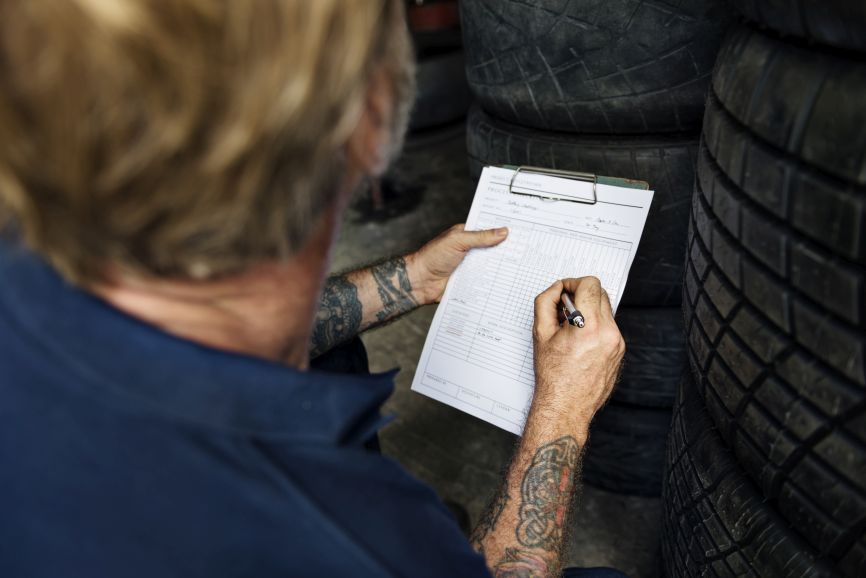
You’ve just been handed a fail sheet with tyres on it, and the first thing you want to know is whether you can drive home.
The answer depends on what the MOT result actually says. If the tyre defect is classed as Major, you may still be able to drive the car in limited circumstances. If it’s classed as Dangerous, you can’t drive it until that defect has been repaired, even if your previous MOT certificate still has time left on it.
Here’s how to check where you stand and what to do next.
Can You Drive It? The One-Word Answer
A car failing its MOT doesn’t always mean the same thing for the person behind the wheel.
The crucial distinction is whether the defect has been recorded as Major or Dangerous.
| Category | Result | Can you drive it? |
| Dangerous | Fail | No. The Dangerous defect must be repaired before the vehicle is driven. |
| Major | Fail | Possibly, if your existing MOT is still valid and the vehicle remains roadworthy. |
| Minor | Pass | Yes. The vehicle passes, although the problem should still be addressed. |
According to GOV.UK, you can take a failed vehicle away only if its current MOT is still valid and no Dangerous problems were recorded.
Even then, the vehicle must remain roadworthy.
Dangerous Defect
If the tester has marked a tyre defect as Dangerous, don’t drive the car.
That applies even if the previous MOT certificate doesn’t expire for another few weeks or months. A valid certificate doesn’t give you permission to drive a vehicle that is currently unsafe.
The defect needs to be repaired where the vehicle is, or the vehicle needs to be transported rather than driven.
Driving a vehicle that has failed because of a Dangerous defect can result in a fine of up to £2,500, three penalty points and a possible driving ban.
Major Defect With an Existing MOT Still Valid
A Major defect also means the vehicle has failed its new MOT.
However, if the old MOT certificate is still valid and there are no Dangerous defects, GOV.UK says you can take the vehicle away.
That doesn’t automatically mean it’s safe to keep using normally. The car must still meet minimum standards of roadworthiness, and the driver remains responsible for its condition.
Major Defect With an Expired MOT
If the old certificate has already expired, you can’t use the vehicle normally on public roads.
You can drive it to have the failed defects repaired or to a pre-arranged MOT test, but it must still be roadworthy while you’re driving it.
If the condition of the tyre makes the vehicle dangerous, get the tyre repaired or replaced before driving.
Which Tyre Problems Are Major, and Which Are Dangerous?
This is where a tyre-specific MOT failure becomes more useful than a generic MOT failure list.
The current DVSA MOT inspection manual sets out how tyre faults should be classified.
Tread Below the Legal Requirement: Dangerous
For most cars, tread must be at least 1.6mm across the central three-quarters of the breadth of the tread and around the entire circumference.
If the tread depth doesn’t meet the MOT requirement, the current DVSA manual classifies the defect as Dangerous.
That means a car that has failed because one of its tyres is below the required tread depth shouldn’t be driven until the failed tyre has been dealt with.
If the measuring area causes confusion, our guide to what the legal tread depth actually measures explains the central three-quarters rule in more detail.
TyreSafe also recommends checking tread regularly and at several points around each tyre.
A Serious Cut Can Be Major
A tyre with a cut that exceeds the permitted limits and is deep enough to reach the ply or cords is classed as a Major defect.
This is one reason the exact wording on the fail sheet matters. A tyre can fail because of damage without automatically falling into the Dangerous category.
Bulges, Structural Failure and Exposed Cords: Dangerous
The classification becomes Dangerous where there is more serious structural damage.
The DVSA manual includes a lump, bulge or tear caused by separation or partial structural failure, lifting tread rubber, and exposed or damaged cords in this category.
A seriously damaged or misaligned tyre valve that is likely to cause sudden deflation is also Dangerous.
Cracking deserves a little more context because visible cracks aren’t all treated the same way. Our guide to how to tell harmless tyre cracking from the dangerous kind explains what surface ageing looks like and when damage becomes a bigger concern.
Other tyre failures can include unsuitable tyres, incorrect fitment, certain mismatched tyres on the same axle, a tyre fouling another component, or a tyre incorrectly seated on the wheel rim. Many of these are classed as Major rather than Dangerous.
What the Fail Certificate Actually Tells You
If your car fails, the test centre can give you a refusal of an MOT test certificate, commonly known as a VT30.
Read the individual defect lines rather than relying on someone simply telling you that the car “failed on tyres”.
The result separates problems according to severity:
- Dangerous
- Major
- Minor
- Advisory
Dangerous and Major defects cause the MOT to fail.
Minor problems don’t cause a failure, although they’re recorded and should be repaired.
Advisories highlight things that may need attention or monitoring but haven’t caused the vehicle to fail.
This distinction matters because two drivers can both walk away saying their car failed on tyres while facing very different situations.
One may have a Major tyre fitment defect while their previous MOT remains valid. Another may have illegal tread or a structurally damaged tyre classed as Dangerous, meaning the failed defect must be repaired before the car is driven.
Check the category next to each tyre problem before deciding what to do.
Got a fail sheet in front of you and not sure how bad it is? Read us the tyre lines and we’ll tell you straight away whether you can drive it.
How Long Have You Got to Fix It?
There isn’t a grace period after an MOT certificate expires.
If your MOT has expired, you can’t simply continue driving for a few days while arranging repairs. Driving without a valid MOT can result in a fine of up to £1,000.
There are specific exceptions.
If the MOT has run out, you can drive the vehicle to have the failed defects fixed or to a pre-arranged MOT test appointment. In either case, it still has to meet minimum roadworthiness standards.
That distinction is particularly important with tyres.
An expired MOT doesn’t automatically prevent a roadworthy vehicle being taken for qualifying repairs or a booked test. But a Dangerous tyre defect must be fixed before the vehicle is driven.
If you can’t repair the car straight away, you can keep it off the public road until you’re ready to have the work done.
Retests: What’s Free and What Isn’t?
Whether you pay for another test depends on where the repairs are carried out and when the vehicle returns.
If you leave the vehicle at the MOT test centre for repair and it receives a partial retest within 10 working days, GOV.UK says there’s no fee for that partial retest.
If you take the vehicle away for repairs, a different rule can apply.
Wheels and tyres are among the items that qualify for a free partial retest if the vehicle is returned to the same MOT test centre before the end of the next working day.
So, for example, if your car fails because of its tyres and you can legally take it away, having the tyres replaced promptly and returning by the next working day may mean you don’t have to pay again for the partial retest.
If you take the vehicle away and return it to the same test centre within 10 working days, you generally only need a partial retest, but the test centre can charge a partial retest fee.
Outside those conditions, you’ll normally need a full MOT test and pay the full test fee again.
It’s therefore worth checking with the original test centre when you’re arranging the repair so you know exactly when the vehicle needs to return.
What If You Can’t Afford the Repairs Right Now?
An MOT failure isn’t always a bill you’ve budgeted for, particularly if more than one tyre or another part of the car needs attention.
Start by separating the actual failures from the advisories.
Ask which defects are Dangerous, which are Major and which are only advisories. You don’t necessarily need to treat every line on the paperwork as equally urgent.
If tyres are the main cost, you also don’t have to jump straight to premium tyres.
There are established budget options that can meet the required standards while keeping the replacement cost lower. Our guide to which budget tyre brands are actually worth buying can help if price is the main barrier to getting the car roadworthy again.
You can also ask the garage whether it offers finance or another way of spreading a larger repair bill.
If you still can’t afford the required work immediately, keep the vehicle off the road until the faults that make it illegal or unsafe to drive have been addressed.
Failed on Tyres: What Are Your Options?
Once you know which tyres failed and why, the practical next step is usually straightforward.
Replace the failed tyre or tyres, deal with any underlying problem that caused the wear, then return the vehicle for the appropriate retest.
If your existing MOT is still valid, there are no Dangerous defects and the vehicle remains roadworthy, you may be able to take it to a tyre fitter.
If the tyre failure is classed as Dangerous, don’t drive to the fitting centre.
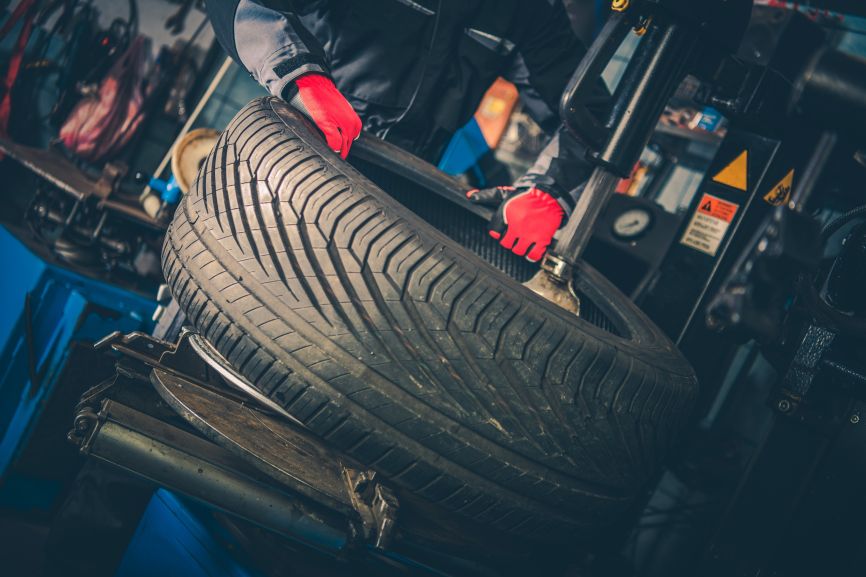
Mobile fitting is particularly useful in that situation because the tyre can be replaced where the vehicle is parked. If mobile fitting isn’t possible, recovery is the alternative.
Before ordering tyres, check the size printed on the sidewall and confirm exactly which tyres need replacement.
It’s also worth understanding why they failed.
A tyre that’s simply worn evenly down to the limit may only need replacing. A tyre that’s badly worn along one edge could point to an alignment, suspension or pressure issue. Replacing the tyre fixes the immediate failure, but not necessarily the cause.
You can check replacement prices for your registration before choosing the replacement that suits your car and budget.
How to Not Fail on Tyres Next Time
A five-minute check before the MOT can catch many tyre problems before the tester does.
Measure the tread in several places across each tyre and at different points around its circumference. Don’t rely on a single groove.
Look over the tread and sidewalls for cuts, bulges, cracking, exposed cords or unusual deformation.
Check all four tyres, including their inner and outer edges. Uneven alignment or suspension problems can leave plenty of tread in one area while another part of the tyre wears much faster.
If you’re seeing wear concentrated towards one shoulder, read our guide to what uneven wear on the outer edge is telling you.
And if the tyres are simply approaching their limit, revisit our guide to tyre tread depth and when to replace your tyres before the next MOT is due.
Getting Failed Tyres Sorted in Redhill
If your car has failed its MOT because of its tyres, Street Tyres can sort the repair work needed to get the vehicle ready for its retest.
You can visit Street Tyres on Holmethorpe Avenue in Redhill for replacement tyres and related repair work when the vehicle can legally and safely be driven.
If your fail sheet records a Dangerous tyre defect, don’t drive the car to us. Mobile tyre fitting is available across Redhill, Reigate, Horley and Merstham, allowing the failed tyre to be replaced where the vehicle is parked.
Street Tyres can also deal with other repair work the vehicle needs to pass and help arrange the retest once the necessary work has been completed.
Street Tyres isn’t an MOT test centre, so the MOT itself is carried out separately.
If you want help understanding what needs doing, get in touch and tell us what’s written on your fail sheet.
Check prices Find the right tyres for your car Enter your registration for prices on tyres that fit. Fitting at our Redhill workshop or at your door.
FAQs
Can I Drive My Car If It Failed Its MOT?
Possibly. If your existing MOT is still valid, there are no Dangerous defects and the vehicle remains roadworthy, you can take it away. If a Dangerous defect has been recorded, it must be repaired before you drive. If the MOT has expired, normal road use isn’t allowed.
What’s the Difference Between a Major and a Dangerous MOT Defect?
Both cause an MOT failure. A Major defect is serious enough to fail the test. A Dangerous defect represents a direct and immediate risk to road safety or the environment. A vehicle that has failed because of a Dangerous problem must have that defect repaired before it can be driven.
Do Worn Tyres Always Fail an MOT?
No. A tyre doesn’t fail simply because it looks worn. For most cars, it needs at least 1.6mm of tread across the required central three-quarters and around the circumference. If tread falls below the MOT requirement, the current DVSA manual classifies the defect as Dangerous.
How Long Do I Have to Fix an MOT Failure?
There’s no general grace period after your existing certificate expires. You can leave the vehicle off the road while arranging repairs, but you can’t continue normal driving without a valid MOT. Limited journeys for repairs or a pre-arranged test are permitted, provided the vehicle remains roadworthy.
Is an MOT Retest Free?
It can be. Leaving the car at the test centre for repair and having it partially retested within 10 working days carries no retest fee. Wheels and tyres can also qualify for a free partial retest if the vehicle is returned to the same test centre by the end of the next working day.
What Happens If I Drive With a Dangerous Defect?
A Dangerous defect must be repaired before the vehicle is driven. Driving a vehicle that has failed its MOT because of a Dangerous problem can result in a fine of up to £2,500, three penalty points and a possible driving ban. A current MOT certificate doesn’t make an unsafe vehicle legal to drive.
Tyres in Redhill, fitted in-store or at your door Street Tyres has been fitting tyres in Redhill since 2016, rated 4.8 from 392 Google reviews. Bring your car to our Holmethorpe Avenue centre, or we will come to you across Redhill, Reigate, Horley and Merstham.