Tyre Wear on the Outside Edge – Is It Legal, and What’s Causing It?
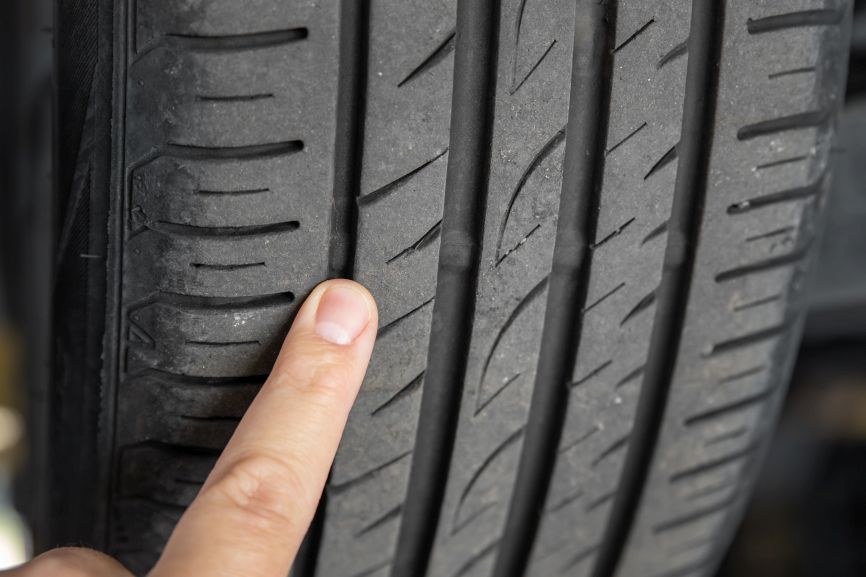
You’ve noticed the outer edge of a front tyre has gone smooth while the middle still has plenty of tread. Maybe it’s happening on both front tyres. The obvious question is whether you can keep driving on them for a while.
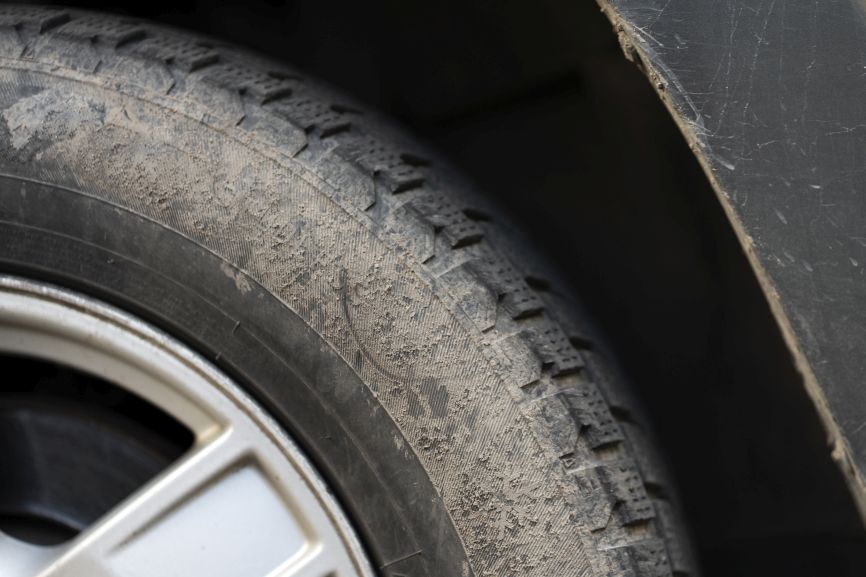
Here’s the part that catches people out: on a car, the legal tread-depth requirement applies to the central three-quarters of the tread. A worn outer shoulder alone doesn’t automatically make the tyre illegal.
But that’s a legal technicality, not a safety verdict. Outside-edge wear means something isn’t right, and if the cause isn’t fixed, the wear is likely to continue.
What the law actually says
Under Regulation 27 of the Road Vehicles (Construction and Use) Regulations 1986, most car tyres must have primary tread grooves at least 1.6mm deep throughout a continuous band covering the central three-quarters of the breadth of tread, around the tyre’s entire circumference.
That wording matters.
The central three-quarters make up six eighths of the tread width. The remaining quarter is split between the two shoulders, leaving one eighth at each edge outside the 1.6mm tread-depth band.
The current DVSA MOT inspection manual is particularly clear: either side of the central three-quarters can be devoid of tread on the vehicles covered by the 1.6mm rule.
So yes, a car tyre can have a smooth outer shoulder and still satisfy the legal tread-depth requirement.
That doesn’t mean the tyre should be ignored. The moment the relevant wear reaches into the central three-quarters and a primary groove falls below 1.6mm, the tyre no longer meets the legal requirement. Structural damage can also make a tyre illegal regardless of where it appears.
Less tread also means less ability to clear water as a tyre wears, which matters for wet-weather braking and grip.
While you’re inspecting the tyre, check its overall condition too, including how to tell harmless tyre cracking from the dangerous kind.
How to find where the legal band starts on your tyre
You can make a useful estimate of the central three-quarter band with a ruler or tape measure.
- Measure the actual breadth of tread from one shoulder to the other.
- Divide that measurement by eight.
- Measure that distance inwards from one shoulder.
- Do the same from the opposite shoulder.
- Everything between those two points is the central three-quarters.
Within that area, the relevant primary grooves need at least 1.6mm of tread depth around the entire circumference.
A worked example
Imagine the actual tread breadth measures 185mm.
185 ÷ 8 = 23.1mm.
Measure roughly 23mm inwards from each shoulder. The area between those two points represents the central three-quarters where the 1.6mm requirement applies.
One important detail: don’t simply read “185” from a tyre marked something like 185/65 R15 and use that figure. The number on the sidewall is the tyre’s nominal section width, not necessarily the measured breadth of tread. Measure the tread itself.
Check the tyre at several places around its circumference too. One section can be legal while another has worn further.
A proper tread-depth gauge gives a more reliable measurement than judging the tyre by eye. If you’re close to the legal limit or aren’t sure which grooves count as primary grooves, have it checked professionally.
When worn edges definitely are illegal
There are several situations where outside-edge wear stops being a grey area.
The wear reaches the legal tread band
Once a primary groove within the central three-quarters drops below 1.6mm at any point around the circumference, the tyre fails the legal tread-depth requirement.
That’s why an edge that’s currently outside the measured zone shouldn’t simply be forgotten.
Ply or cord is exposed or damaged
Visible structural ply or cord is a serious defect wherever it occurs, including at the shoulder.
The central-three-quarters rule only concerns tread depth. It doesn’t give an exemption for structural damage outside that area.
The tyre has serious structural damage
A lump, bulge or tear caused by separation or partial failure of the tyre structure is a serious defect.
Cuts need slightly more careful wording. A small superficial cut isn’t automatically illegal. MOT failure criteria depend on the size and depth of the cut and whether ply or cord is reached, exposed or damaged.
If you can see reinforcement or the tyre has a bulge suggesting structural failure, don’t rely on remaining tread depth as proof that it’s safe.
The vehicle is subject to different rules
Don’t apply the normal car rule to every vehicle.
For example, passenger vehicles with more than eight passenger seats, excluding the driver, are subject to different tread requirements. Under the current MOT rules, these vehicles generally require a visible tread pattern over the whole tread area and at least 1.0mm within the required band.
Other heavier or specialist vehicles can also have different requirements. If you’re checking a minibus or another vehicle outside the usual passenger-car category, use the rules for that vehicle class.
Will worn outer edges fail an MOT?
Not automatically.
For a normal passenger car, the tread-depth assessment applies to the primary grooves within the central three-quarters. A bald area confined to the outer shoulder can therefore still pass the tread-depth part of the MOT.
But the tester assesses more than tread depth.
Under the DVSA MOT inspection manual, tread depth below the required level is a Dangerous defect.
A lump, bulge or tear caused by structural separation or partial failure, including exposed or damaged cords, is also classed as Dangerous. Certain cuts that reach the ply or cords are Major defects.
So a worn shoulder might not fail purely because it’s smooth, but the tyre can still fail if the wear has entered the legally measured zone or if another qualifying defect is present.
An MOT pass also isn’t a recommendation to continue driving on an obviously deteriorating tyre indefinitely. It only shows that the vehicle met the relevant test standards at the time it was inspected.
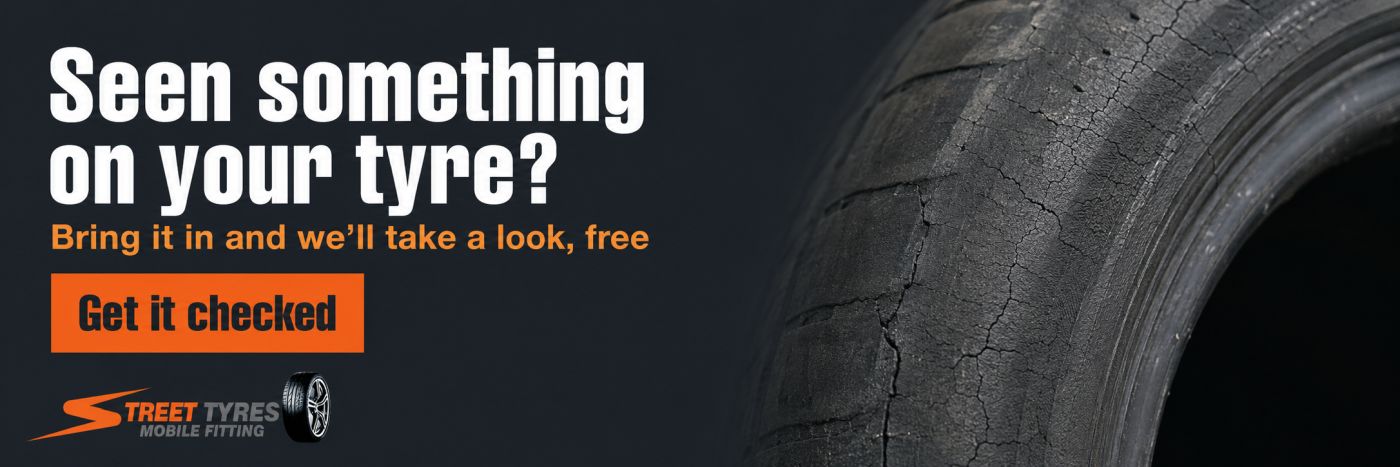
Seen something on your tyre you are not sure about? Bring it in and we will take a look - we would rather tell you it is fine than have you drive on it wondering.
01737 771100Does uneven tyre wear affect your insurance?
Uneven tyre wear doesn’t automatically invalidate your insurance.
However, many motor insurance policies require the vehicle to be kept in a roadworthy condition. If a tyre is illegal or defective and its condition is relevant to an accident, the insurer may investigate that when deciding how to handle the claim.
That doesn’t mean every claim involving a worn tyre will be refused. The outcome depends on the policy wording, the tyre’s condition, the circumstances of the incident and whether the defect was relevant to the loss.
Financial Ombudsman decisions also show why blanket claims about insurance are misleading: roadworthiness can matter, but insurers generally need a fair basis for applying the relevant policy condition to the circumstances.
There are separate legal consequences for illegal tyres. TyreSafe states that driving with tyres below the minimum tread-depth requirement can result in a fine of up to £2,500 and three penalty points per tyre.
TyreSafe also says 3mm is commonly recommended by tyre and safety experts and advises motorists to consider replacement before reaching the 1.6mm legal minimum.
If you’ve already noticed significant uneven wear, fixing it is a safer bet than gambling on how far it can progress before becoming illegal.
What actually causes outside-edge wear?
One-sided shoulder wear is a symptom rather than a diagnosis. Several faults can cause it.
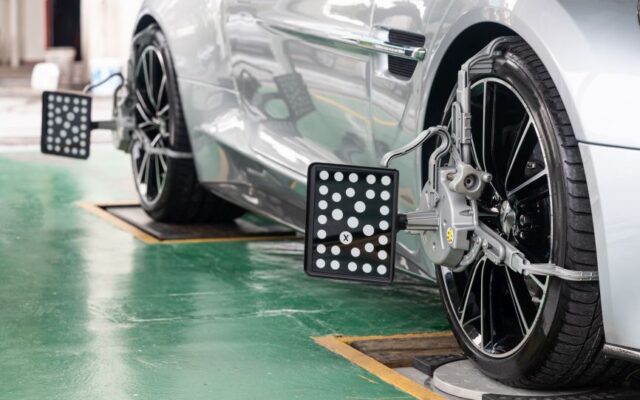
Wheel alignment or geometry
Incorrect wheel geometry should be high on the list when one side of the tread is wearing considerably faster than the rest.
Camber is the inward or outward tilt of a wheel when viewed from the front. Excessive positive camber can put more load on the outer shoulder and accelerate wear there. Excessive negative camber tends to produce the opposite pattern, with more wear towards the inner shoulder.
Incorrect toe can also scrub the tread and create rapid or feathered wear. However, you can’t reliably diagnose the exact toe fault simply by seeing an outer edge that’s worn. Alignment measurements are needed.
Underinflation
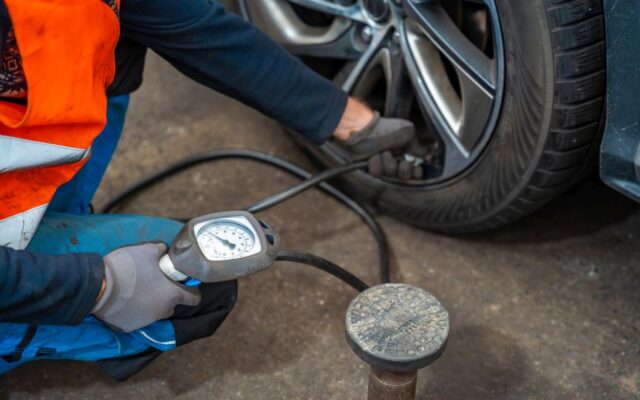
Low pressure changes the shape of the tyre’s contact patch and puts greater load on the shoulders.
The classic underinflation pattern is accelerated wear on both shoulders of the same tyre, with the centre comparatively less worn.
If only one shoulder is disappearing, alignment or suspension geometry becomes a stronger suspect.
Check pressures when the tyres are cold and use the figures specified by the vehicle manufacturer for the load you’re carrying.
Worn suspension or steering components
Bushes, ball joints, springs, dampers and other suspension or steering components help keep the wheel in the intended position.
Wear or damage can allow geometry to change and produce abnormal tread wear. There’s little value in repeatedly adjusting alignment if a worn component is allowing the wheel to move out of position again.
Kerb strikes and potholes
A hard pothole hit or kerb impact can alter wheel alignment or damage steering and suspension components.
Sometimes you’ll notice the steering wheel sitting off-centre or the vehicle pulling. In other cases, unusual tyre wear is the first obvious clue.
Cornering and driving conditions
Frequent hard cornering can increase shoulder wear, particularly on front tyres.
Road layout and repeated roundabouts can also influence wear over time. But severe or rapidly developing one-sided wear shouldn’t be blamed on driving style until tyre pressure, wheel geometry and suspension condition have been checked.
Both front tyres wearing on the outside edge
When both front tyres develop similar outside-shoulder wear, look for a cause affecting the front axle rather than assuming two tyres have developed unrelated faults.
Wheel geometry deserves checking. So do the tyre pressures.
The exact pattern matters. If both shoulders of each individual tyre are wearing faster than their centres, underinflation becomes a stronger possibility. If the outer shoulder alone is wearing heavily on both fronts, alignment geometry should be investigated.
If just one front tyre has significant outside-edge wear, an alignment problem on that wheel, pothole or kerb damage, or a worn suspension component on that corner becomes more likely.
The appearance narrows down the possibilities, but proper measurements are what confirm the cause.
What the other tyre wear patterns mean
| Where it’s worn | What to investigate |
| Outer shoulder on one tyre | Alignment or camber, suspension wear or impact damage |
| Outer shoulder on both front tyres | Front wheel geometry and tyre pressures |
| Both shoulders of the same tyre | Underinflation |
| Inner shoulder | Alignment or camber and suspension condition |
| Centre band | Overinflation |
| Patchy, cupped or scalloped wear | Dampers, suspension, wheel balance or other mechanical faults |
Treat this table as a diagnostic starting point, not a final verdict. Similar-looking wear can have more than one cause.
What to do about outside-edge tyre wear
Start with the cause, not the replacement tyre.
Check the pressures first. Then have the wheel alignment and suspension inspected if the wear pattern points towards geometry.
If worn suspension or steering components are found, repair them before relying on an alignment adjustment.
Diagnose and correct the alignment problem before putting a new set of tyres back into the same conditions.
Where new tyres are required, the geometry should be corrected as part of the repair process so the replacements aren’t immediately subjected to the fault that damaged the old ones.
If the tyre still meets the tread-depth requirements, has no structural defect and is considered safe after inspection, it may still have usable life once the cause has been corrected. Uneven wear doesn’t automatically mean a legal tyre has to be replaced immediately.
If the wear has entered the legal band, reinforcement is exposed, structural damage is present or the tyre is otherwise unsafe, replacement is required.
You can check replacement prices for your registration if you need new tyres.
If you’re weighing up different options, our guide to what the different tyre price tiers actually get you explains the differences between budget, mid-range and premium tyres. You can also see our guide to budget tyre brands worth considering if cost is a priority.
Whatever you choose, fixing the reason for the uneven wear is what protects the replacement.
Getting it sorted in Redhill
Street Tyres can inspect unevenly worn tyres, measure the remaining tread and help establish what needs attention before another set wears the same way.
We’re based on Holmethorpe Avenue in Redhill, with mobile tyre fitting available across Redhill, Reigate, Horley and Merstham.
Wheel alignment is a workshop job, so the vehicle needs to come to us for that part of the work. Mobile fitting is useful when replacement tyres are needed away from the workshop, but alignment itself requires workshop equipment.
If you’re unsure how far the shoulder wear has progressed, get in touch and we’ll help you work out the next step.
Check prices
Find the right tyres for your car
Enter regEnter your registration for prices on tyres that fit. Fitting at our Redhill workshop or at your door.
FAQs
Is it illegal to drive with tyre wear on the outside edge?
Not automatically on a normal car. The 1.6mm requirement applies to primary grooves within the central three-quarters of the tread. However, the tyre can become illegal if the wear enters that zone or if it has another defect, such as exposed or damaged cords.
Will worn outer edges fail an MOT?
A smooth outer shoulder alone may not fail the tread-depth check if the central three-quarters remains compliant. The tester also assesses the whole tyre for defects. Insufficient legal tread depth, dangerous structural damage or certain cuts reaching the ply or cords can result in an MOT failure.
What causes both front tyres to wear on the outside edge?
Wheel geometry and tyre pressure should be checked first. Matching one-sided shoulder wear can point towards an alignment problem, while wear on both shoulders of each tyre is more characteristic of underinflation. Suspension wear, impacts and driving conditions can contribute too.
Can wheel alignment fix uneven tyre wear?
Alignment can correct wheel geometry and prevent the same fault from continuing to wear the tread, but it can’t restore rubber that’s already gone. Any worn suspension parts should also be repaired, and the tyres still need checking to make sure they’re legal and safe to continue using.
Does uneven tyre wear affect insurance?
Uneven wear doesn’t automatically invalidate a policy. However, insurers can consider whether a vehicle was roadworthy and whether a defective tyre was relevant to an accident. What happens to a claim depends on the policy wording, the circumstances and the evidence, so there isn’t a universal rule.
A bald-looking shoulder can technically sit outside the area where a car’s 1.6mm tread depth is measured. That’s not a reason to ignore it. It’s a warning that the tyre isn’t wearing normally, and finding the cause now can prevent an illegal tyre and another prematurely worn replacement later.
Tyres in Redhill, fitted in-store or at your door
Street Tyres has been fitting tyres in Redhill since 2016, rated 4.8 from 392 Google reviews. Bring your car to our Holmethorpe Avenue centre, or we will come to you across Redhill, Reigate, Horley and Merstham.