Pre-MOT Check – What to Look At Before Your Test
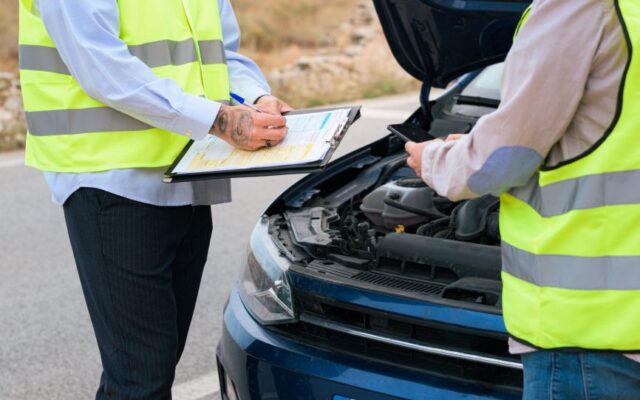
A surprising number of MOT problems are things you could have spotted on the driveway before handing over the keys. A blown bulb. An empty washer bottle. A wiper blade that’s been smearing the screen for months.
None of those needs specialist diagnostic equipment. They just need someone to look.
A useful pre-MOT check is about finding obvious problems before the official test, then getting anything less obvious inspected properly. Here’s what gets checked, what you can do yourself in about 15 minutes, and the tyre problems that are especially easy to miss.
What is a pre-MOT check?
A pre-MOT check is an unofficial inspection carried out before the statutory MOT. It looks for faults that could cause problems during the test so you can deal with them first.
It has no official standing. It isn’t part of the DVSA testing system, doesn’t replace an MOT and can’t guarantee a pass.
There’s no standard pre-MOT check cost. Some garages include a basic check with other work, while others charge separately, so ask what’s actually included.
It can be worthwhile if the car is older, has covered a lot of miles, hasn’t been inspected recently or had advisories last time. On a newer, well-maintained car with no known problems, paying for a separate check may be less useful.
The official MOT checks whether important parts of the vehicle meet road-safety and environmental standards. You can read the basics on GOV.UK.
What gets checked in an MOT?
For a normal car, the MOT covers lighting and signalling, brakes, steering and suspension, wheels and tyres, seatbelts and restraint systems, body and structure, exhaust and emissions, the driver’s view of the road, registration plates, the VIN and other safety-related equipment.
Requirements vary with the vehicle’s age, class and specification. The test also looks at condition and operation, not just whether a part exists. A tyre, for example, can have enough tread in one area and still fail because of damage elsewhere.
For the detailed standards testers use, see the DVSA MOT inspection manual.
The 15-minute check you can do yourself
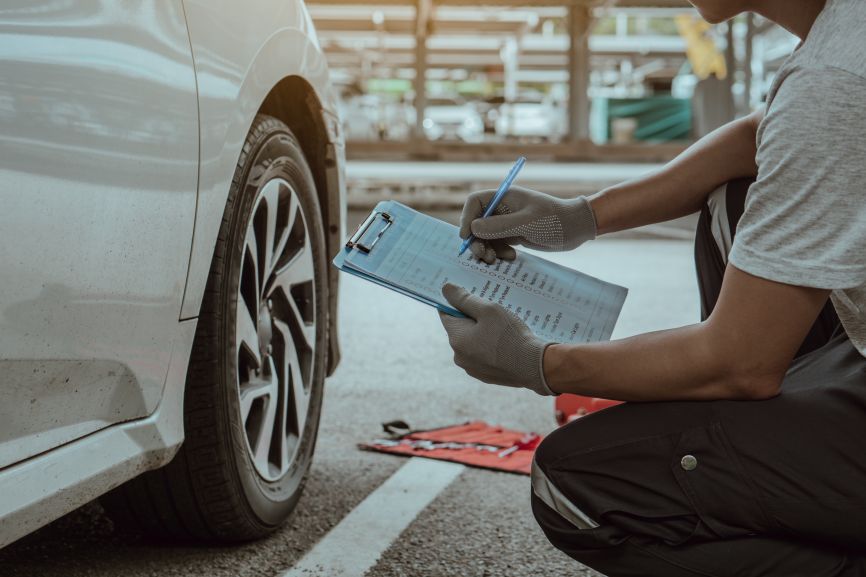
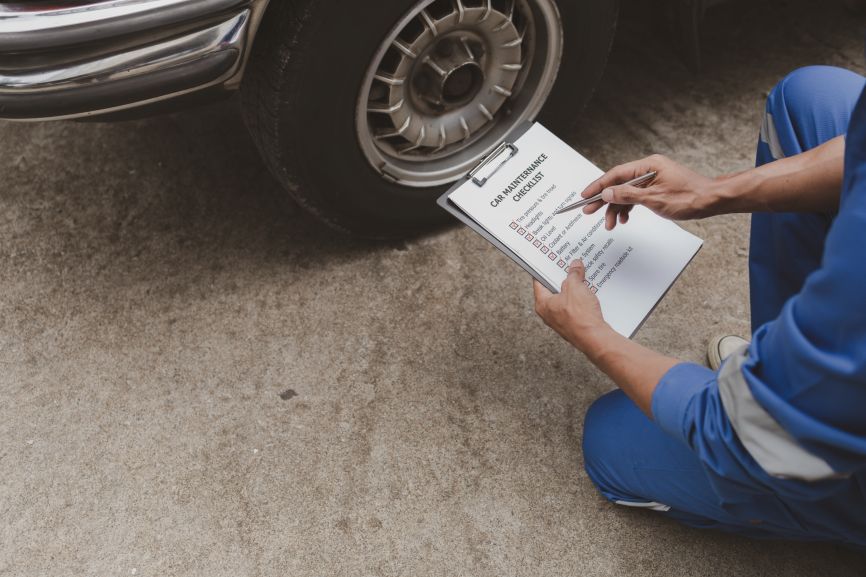
Give yourself about a quarter of an hour, preferably in daylight, and work around the car in the same order every time.
- Lights: switch on the sidelights, dipped headlights and main beam. Check indicators, hazards, rear lights, fog lamps, reversing lights and number plate lights where they apply. For the brake lights, ask someone to stand behind the car or use the reflection in a window or garage door.
- Washers and wipers: make sure there’s washer fluid and the jets actually reach the screen. Run the wipers and check that they work continuously when switched on and clear the area you need to see through. Split, loose or badly worn blades need attention.
- Windscreen: check for cracks, chips and anything obstructing the driver’s view. Testers consider damage over 10mm in Zone A, the 290mm-wide area centred on the steering wheel within the swept area, and over 40mm in the rest of the swept area. Failure depends on whether the damage significantly affects the view of the road.
- Number plates: make sure the required plates are present, secure and legible. Look for heavy fading, damage or dirt, and check that the characters haven’t been altered or obviously spaced incorrectly.
- Horn: press it. If the horn doesn’t work, get it sorted before the test.
- Mirrors: check that the required mirrors are present, secure and usable. Damage matters if it prevents the mirror from providing the required view.
- Seatbelts: check the fitted belts, including those in the rear. Look for serious cuts or fraying, fasten each belt and make sure it releases correctly. Where a retractor is fitted, make sure the belt retracts.
- Warning lights: ABS, supplementary restraint systems, electronic stability control and other monitored systems can form part of the MOT. On applicable M1 vehicles first used on or after 1 January 2012, a malfunctioning TPMS is a Major defect. A light showing low tyre pressure does not automatically mean the system has malfunctioned. If yours is illuminated, read what the tyre pressure warning light means.
- Brake fluid: if the reservoir is transparent and easy to inspect, check the level against its marks. Under the current MOT manual, fluid below the minimum mark is a Minor defect, significantly below the minimum is Major, and fluid not visible is Dangerous. A falling level needs investigating, not repeated topping up.
- Boot and load area: remove clutter that could block access. A tester can refuse or abandon a test if a load or other items prevent a proper inspection.
If something looks questionable, it’s better to find out before the car is on the test lane.
Found something you’re not sure about? Ring us before you book the test – it’s usually cheaper to sort it beforehand than to pay for a retest.
Checking your tyres properly
This is the part worth spending extra time on. Tyres are easy to glance at and assume are fine, but the inner edge, shoulder or sidewall can tell a very different story.
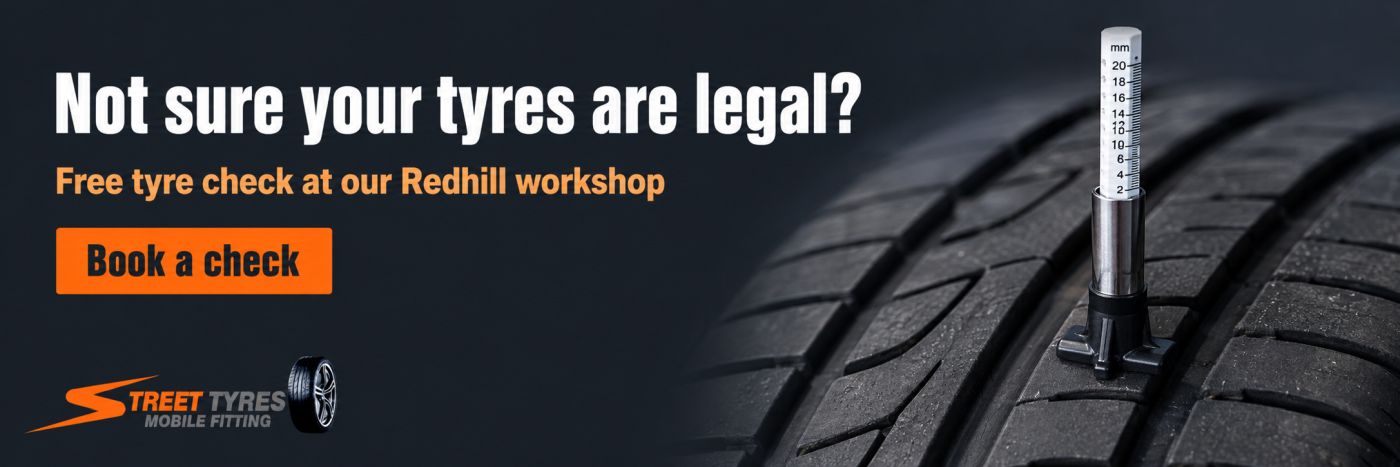
Check tread depth in several places
For most cars and light vans, the primary tread grooves must be at least 1.6mm deep within the central three-quarters of the breadth of the tread and around the tyre’s entire circumference.
Checking one convenient point isn’t enough.
A tyre might measure above 1.6mm where you put the gauge but fall below the requirement further around the tyre. The current MOT manual classifies tread depth below the applicable requirement as a Dangerous defect.
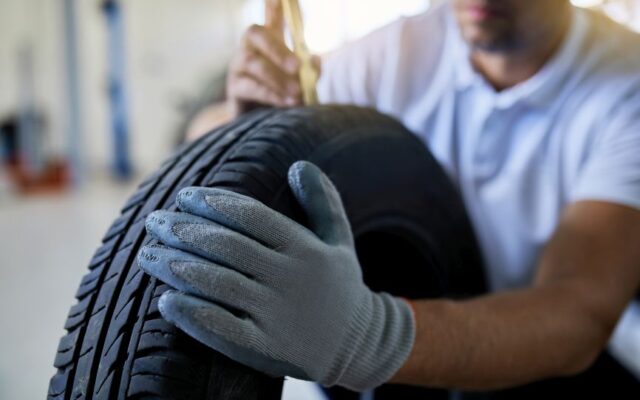
Use a tread-depth gauge if you have one and check several primary grooves at more than one point around each tyre. Tread-wear indicator bars can also show when a tyre is approaching the limit.
TyreSafe explains the basic checks, while our guide covers the legal tread depth and how to measure it in more detail.
Look at the inner and outer shoulders
Tyres don’t always wear evenly.
Wear on both shoulders can be associated with low pressure, centre wear with overinflation, and heavy wear on one shoulder with alignment or suspension issues.
A worn shoulder doesn’t automatically fail the tread-depth rule because the common 1.6mm measurement applies within the central three-quarters. But the tyre can still fail for exposed cords, structural damage or another serious defect.
Turn the front wheels so you can see the inner shoulders. A tyre that looks healthy from the outside can be badly worn out of sight.
See what uneven wear across the tyre means if one edge is disappearing much faster than the rest.
Cuts, exposed cords, lumps and bulges
These deserve more attention than cosmetic scuffs.
The DVSA manual says visible ply or cord is a failure. If opening a cut with a blunt instrument reveals ply or cord, that also fails. A cut over 25mm or 10% of the tyre’s section width, whichever is greater, can fail if the cords can be felt when the cut is carefully opened.
Structural defects are more serious. A lump, bulge or tear caused by separation or partial failure of the tyre structure, lifting tread rubber, or exposed or damaged cords is classed as Dangerous.
A genuine sidewall bulge is therefore not something to leave until the MOT date. It can indicate internal structural damage.
Does tyre cracking cause an MOT failure?
Not every fine surface crack means an automatic MOT failure.
Light surface weathering can appear without automatically meeting an MOT rejection criterion. What matters is whether deterioration has progressed into a serious cut, exposed reinforcement, a structural bulge, separation or another testable defect.
Check the outer sidewall, between the tread blocks and as much of the inner sidewall as you can safely see.
If you’re unsure where harmless-looking ageing ends and a real safety problem begins, read which tyre cracking is dangerous and which isn’t.
Tyre pressure matters, but the rule is often misunderstood
An obviously under-inflated tyre is currently a Minor MOT defect. It isn’t, by itself, an automatic MOT failure.
Pressure still matters because incorrect inflation can accelerate uneven wear and affect handling. Check tyres cold and use the pressure specified for your vehicle and load, not the maximum pressure moulded into the tyre sidewall.
Tyre pressure and TPMS condition are separate MOT issues. On vehicles to which the TPMS inspection applies, a confirmed TPMS malfunction is a Major defect.
Do tyres on the same axle have to match?
They don’t have to be the same brand.
For the MOT, however, tyres on the same axle being different sizes is a Major defect, subject to the specific exceptions in the manual. Tyres of different structures, such as radial-ply and cross-ply, must not be mixed on the same axle either.
That’s worth checking if a tyre was replaced in a hurry after a puncture or breakdown.
Is the spare tyre checked?
For a normal car MOT, only tyres fitted to the road wheels at the time of the inspection are tested. If a tester notices a defect on a spare tyre, the manual says the presenter should be advised, but the spare itself isn’t part of the normal tyre inspection.
Check it anyway if your car carries one. A flat or badly deteriorated spare is no help when you actually need it.
Don’t forget the valves
Take a quick look at the valves while checking the tyres. A valve that is seriously damaged or misaligned and likely to cause sudden deflation is classed as a Dangerous defect.
If a tyre is close to the limit or clearly needs replacing, you can check tyre prices for your registration before the MOT.
What fails an MOT most often?
DVSA figures show the same broad areas appearing repeatedly among defects recorded during initial MOT tests.
For class 3 and 4 vehicles in April to June 2026, lamps, reflectors and electrical equipment defects were recorded in 9.98% of initial tests. Suspension defects appeared in 8.21%, tyre defects in 6.55%, brake defects in 5.83% and visibility defects in 4.40%.
Those percentages don’t mean that 9.98% of cars failed solely because of lighting. A vehicle can have defects in several categories.
They do show why a walk-around is worthwhile. Exterior lights take minutes to check, while tyre problems such as inner-edge wear, sidewall damage or low tread in one section can stay hidden until somebody looks closely.
Minor, Major and Dangerous: what the results mean
A Minor defect doesn’t cause an MOT failure on its own, although it should still be monitored or repaired.
Major and Dangerous defects cause the vehicle to fail. A Dangerous defect indicates a more immediate road-safety risk and can also affect whether the vehicle can legally be driven away.
For the tyre-specific consequences, see what happens if your car fails its MOT on tyres.
What about advisories?
An advisory isn’t a failure and it doesn’t create a legal requirement to repair that item simply because it appears on the MOT record.
It’s the tester drawing your attention to something that doesn’t meet a failure threshold but may need monitoring or attention. You’re still responsible for keeping the vehicle roadworthy between MOTs.
Tyres approaching the legal limit are a good example. A tyre can pass today and be recorded for you to watch, then wear below the legal requirement long before the next MOT if you cover enough miles.
That’s why last year’s advisories are one of the best pre-MOT checklists you have. Before this year’s test, go back through them and see what was already starting to deteriorate.
Is a pre-MOT check worth paying for?
It depends on the car. A pre-MOT check makes more sense when the vehicle is older, has unresolved advisories, has covered substantial mileage or simply hasn’t had much attention. It can also help if you’re not confident assessing tyres and basic items yourself.
On a newer, well-maintained car with no warning lamps, known problems or outstanding advisories, the 15-minute home check may be enough.
There’s no standard UK pre-MOT check price. If you’re paying, ask whether you’re getting a quick visual once-over or a more detailed inspection.
Pre-MOT checks in Redhill
Street Tyres can check your car over before its MOT, identify obvious issues and deal with tyre work, brakes and other repair work where needed. We can also help arrange the MOT test.
The MOT itself is carried out separately. Street Tyres is not an MOT test centre and does not carry out the statutory MOT test.
We’re based at 23 Holmethorpe Avenue in Redhill. Mobile tyre fitting is also available across Redhill, Reigate, Horley and Merstham.
If you want to discuss what needs checking or repairing before the test, get in touch.
Check prices Find the right tyres for your car Enter your registration for prices on tyres that fit. Fitting at our Redhill workshop or at your door.
FAQs
What is a pre-MOT check?
A pre-MOT check is an unofficial inspection carried out before the statutory MOT. It looks for faults or obvious problems that could affect the test so they can be investigated beforehand. It isn’t a DVSA test, doesn’t replace the MOT and can’t guarantee that the vehicle will pass.
How much does a pre-MOT check cost?
There’s no standard UK price for a pre-MOT check. Some garages include a basic check with servicing or other work, while others charge separately. Because the scope varies, ask what’s included before comparing prices. A brief visual check and a more detailed workshop inspection aren’t the same service.
What are the most common MOT failures?
Recent DVSA data shows lamps and electrical equipment, suspension, tyres, brakes and visibility among the largest defect categories recorded during initial class 3 and 4 MOT tests. Some of the easiest problems to catch at home include failed bulbs, poor wipers, tyre damage and obvious visibility issues.
Do I have to fix MOT advisories?
Not simply because they’re listed as advisories. An advisory isn’t an MOT failure and doesn’t automatically have to be repaired by law. You must still keep the vehicle roadworthy, though, and an advisory can deteriorate into a safety problem or future MOT failure, so it’s sensible to monitor it.
Will worn tyres fail an MOT?
They can. For most cars, the primary tread grooves need at least 1.6mm within the central three-quarters of the tread and around the entire circumference. Tyres can also fail for serious cuts, exposed or damaged cords, structural bulges, incorrect size combinations or other condition and fitment defects.
Can I check my own car before its MOT?
Yes. You can check lights, washers, wipers, number plates, mirrors, seatbelts, the horn, warning lamps, windscreen condition, visible brake-fluid level and tyres at home. You can’t reproduce the complete MOT inspection on a driveway, but a systematic 15-minute check can catch many straightforward problems before the test.
Tyres in Redhill, fitted in-store or at your door Street Tyres has been fitting tyres in Redhill since 2016, rated 4.8 from 392 Google reviews. Bring your car to our Holmethorpe Avenue centre, or we will come to you across Redhill, Reigate, Horley and Merstham.