Cracks in Your Tyres – When They’re Harmless and When They’re Not
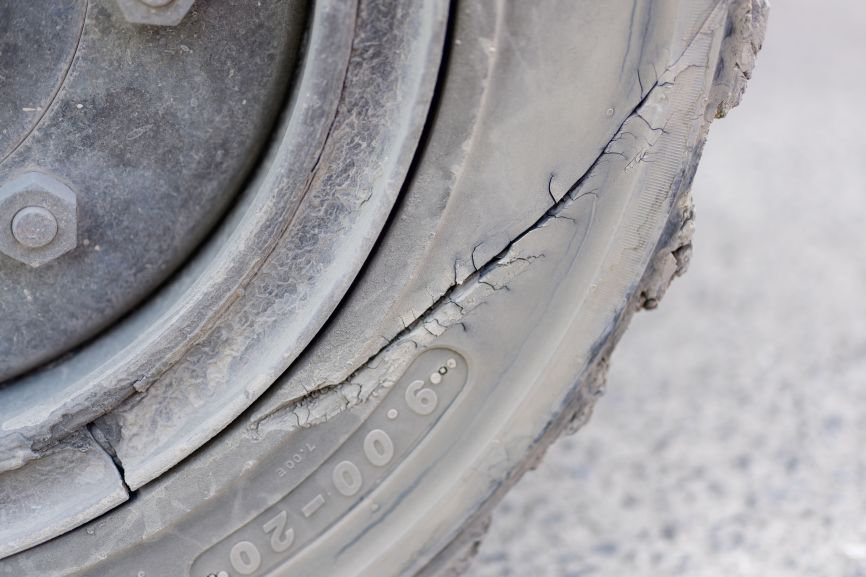
Crouch down next to almost any older car and you may find some cracking in the rubber. Fine lines across the sidewall, little splits at the bottom of the tread grooves, or both.
Most light surface cracking isn’t an emergency. Sometimes it’s simply cosmetic ageing. But deeper cracks can mean the rubber has started to deteriorate and the tyre needs professional attention or replacement.
The difference comes down mainly to where the cracking is, how deep it goes and whether the tyre’s structure is affected. You can make a useful first assessment yourself in about a minute.
Why Tyres Crack in the First Place
Tyres don’t stay chemically identical throughout their lives.
Their rubber compounds contain protective ingredients that help the tyre remain flexible and resist ageing. Over time, exposure to oxygen, ozone, sunlight and temperature changes alters the rubber. The surface can gradually harden and develop fine cracks.
That’s why cracking isn’t simply a mileage problem.
A car that’s covered relatively few miles can still have aged tyres, while another vehicle with much higher mileage may have tyres in better condition.
Heat and prolonged exposure to sunlight can accelerate deterioration. Incorrect tyre pressures can contribute too, particularly when underinflation causes excessive flexing and heat build-up.
Cleaning products are another possible factor. Some chemicals used to make sidewalls look shiny can remove protective agents from the rubber and leave it more vulnerable to cracking.
Low mileage isn’t necessarily protective either. Tyres continue to age while a vehicle is parked, and prolonged storage can bring its own problems. Sunlight, ozone, incorrect pressure and leaving a vehicle sitting in one position for long periods can all affect tyre condition.
That’s why a barely used second car can sometimes have older-looking tyres than a daily driver.
Tyre Cracking Severity Chart
Not every crack deserves the same response. This tyre sidewall cracking chart gives you a practical starting point.
| What you’re seeing | Where | What it means | What to do |
| Fine surface lines, similar to dried skin or “crazing” | Sidewall | Surface ageing | Monitor regularly |
| Fine lines | Base of tread grooves | Early signs of rubber ageing | Monitor and check tread depth |
| Cracks you can clearly see into | Sidewall | Deterioration is more advanced than surface crazing | Get the tyre inspected |
| Cracks deep enough to take the edge of a fingernail | Sidewall | More significant cracking that shouldn’t be ignored | Arrange a professional inspection promptly |
| Cracking with cord or ply visible | Anywhere | Structural material is exposed | Replace immediately |
| Cracking together with a bulge or lump | Sidewall | Possible structural separation or partial failure | Stop driving on it |
| Deep cracking between tread blocks | Tread | Advanced deterioration | Have it inspected and expect replacement if structural material is affected |
The Fingernail Test
There’s a simple check you can use to distinguish very light surface crazing from cracks with obvious depth.
Gently run a clean fingernail across the crack. If you’re only seeing hairline marks on the surface and your nail doesn’t enter them, you’re probably looking at superficial ageing rather than a deep split.
If your nail clearly catches or enters the crack, take that as a reason to get the tyre inspected.
The fingernail test isn’t an MOT standard, and there’s no official rule saying that a crack becomes illegal or automatically needs replacing at a particular fingernail depth. It’s simply a useful way of recognising that you’re no longer looking at fine surface crazing.
If you can see fabric, ply or cords inside a crack, don’t continue probing it yourself. The tyre needs replacing.
A bulge or lump is even more concerning. It can indicate separation or partial failure within the tyre’s structure, which is very different from ordinary surface ageing.
Tread depth needs checking separately. UK car tyres require at least 1.6mm of tread across a continuous band covering the central three-quarters of the tyre, around its complete circumference, as explained by TyreSafe.
That means a tyre can have plenty of tread remaining but still be unsafe because of its physical condition.
If yours has reached the replacement stage, you can check replacement prices for your registration.
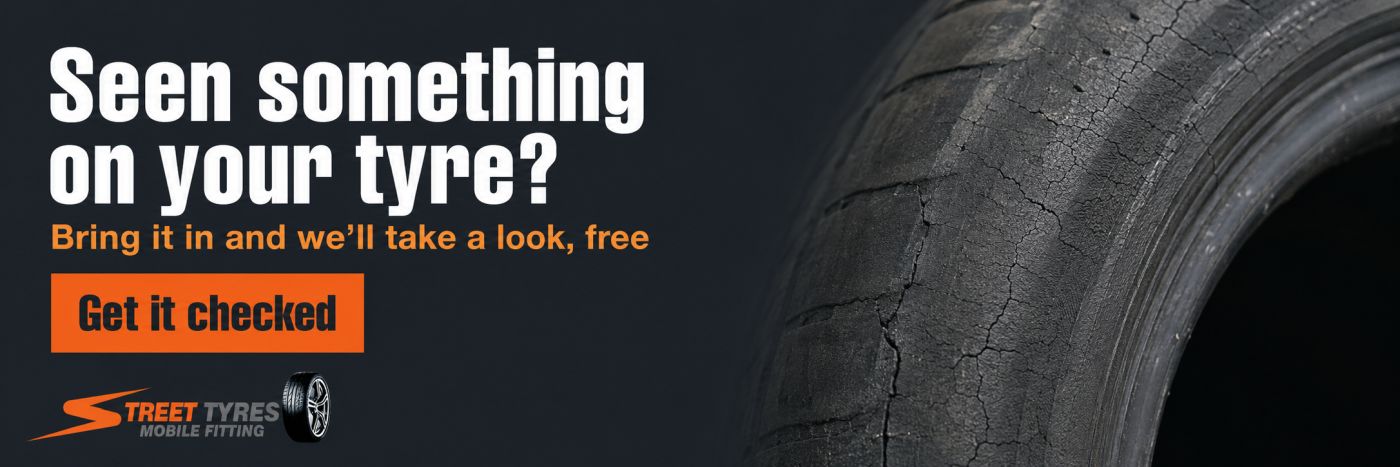
Seen something on your tyre you are not sure about? Bring it in and we will take a look - we would rather tell you it is fine than have you drive on it wondering.
01737 771100Will Cracked Tyres Fail an MOT?
Not automatically.
An MOT tester doesn’t simply see a crack and fail the tyre. The tyre is assessed against specific condition requirements.
Tread depth and tyre condition are separate checks. A tyre could have 5mm of tread remaining and still fail because of serious structural damage.
Fine surface crazing with no exposed or damaged structural material doesn’t automatically meet the DVSA criteria for an MOT failure. Minor deterioration may therefore remain serviceable, although any developing cracks should still be monitored.
Goodyear also notes that small cuts that aren’t deep enough to expose the carcass may not cause a failure, although some cuts and splits may result in an advisory.
Section 5.2.3 of the DVSA MOT inspection manual sets out the tyre damage criteria.
A tyre fails if:
- ply or cord can be seen without touching the tyre
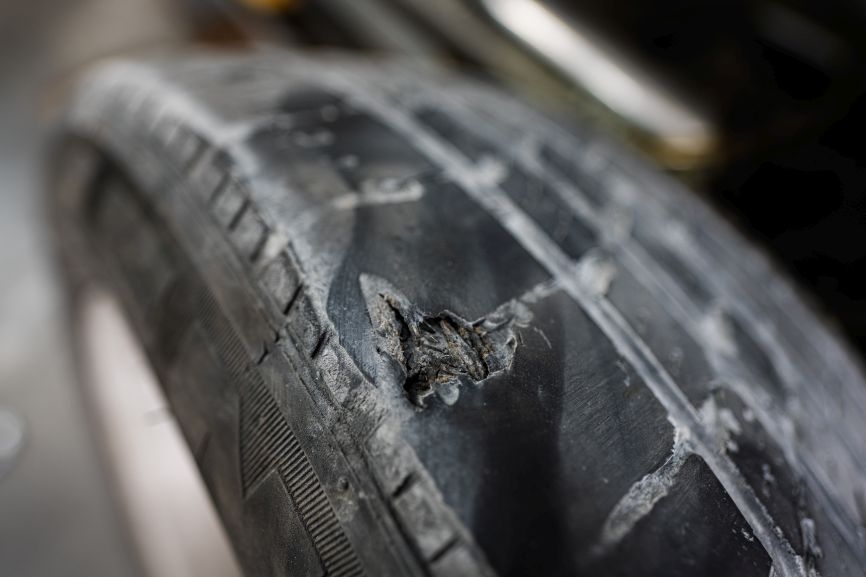
- opening a cut carefully with a blunt instrument reveals exposed ply or cord, regardless of the cut’s size
- a cut greater than 25mm or 10% of the tyre’s section width, whichever is greater, allows the tester to feel the cords even if they can’t be seen
- it has a lump, bulge or tear caused by separation or partial failure of its structure
- cords are exposed or damaged
A cut exceeding the permitted criteria and deep enough to reach the ply or cords is classed as a Major MOT defect. A lump, bulge or tear caused by structural separation or partial failure, including exposed or damaged cords, is classed as Dangerous.
So don’t judge an ageing tyre purely by the amount of tread it has left.
If you’re seeing nothing more than shallow surface crazing, an MOT failure isn’t inevitable. If the cracking has opened far enough to expose or affect the tyre’s construction, it’s a different situation.
Are Cracked Tyres Illegal?
There’s no blanket UK rule that makes a tyre illegal simply because there’s a visible crack in its surface.
What matters is whether the tyre complies with roadworthiness requirements.
Fine cosmetic cracking isn’t automatically an offence. But defects such as exposed cords, serious structural damage and qualifying cuts can make a tyre unroadworthy.
That means two drivers can both describe their tyres as “cracked” while dealing with completely different situations.
One may have shallow surface crazing that needs monitoring. The other may have a split exposing the tyre’s internal structure and need an immediate replacement.
Drivers are responsible for keeping their cars roadworthy even when they have a valid MOT certificate. GOV.UK states that driving a vehicle in a dangerous condition can result in a fine of up to £2,500, three penalty points and possible disqualification.
Defective tyre offences can also carry penalty points.
The sensible rule is simple: surface crazing can often be monitored; structural damage can’t be ignored.
How Old Is Too Old for a Tyre?
There’s no general statutory maximum tyre age for ordinary private cars in Great Britain.
That doesn’t mean age doesn’t matter.
Tyre manufacturers generally recommend increasingly careful inspection as tyres get older, but exact advice varies between brands. Michelin, for example, recommends annual professional inspections once a tyre has been in use for five years and precautionary replacement at 10 years from its manufacture date if it hasn’t already been replaced.
Age should never override condition. A younger tyre with serious cracking or damage may need changing long before an older tyre that’s remained in good condition.
This is especially worth checking when buying part worn tyres. A tyre can have plenty of tread remaining while already being several years old.
There is, however, a specific legal age restriction for certain heavier vehicles.
Since 1 February 2021, tyres more than 10 years old have been prohibited on the front steered axles of goods vehicles over 3.5 tonnes, buses and coaches. The restriction also applies to tyres fitted as single wheels on minibuses, including relevant rear axles. Twin-wheel minibus fitments are treated differently under the legislation.
That restriction doesn’t create a blanket ten-year legal limit for normal private cars.
If your tyres do need changing, our guide to what the different tyre price tiers actually get you explains the practical differences between budget, mid-range and premium options.
How to Find Your Tyre’s Age
Look on the sidewall for the four-digit manufacture date code.
The first two digits show the week of manufacture and the final two show the year.
For example:
2419 = week 24 of 2019.
A tyre marked 3523 was manufactured in week 35 of 2023.
The date marking may appear alongside other tyre identification information on the sidewall. On some tyres, the full date marking is visible on only one side, so it may be facing towards the inside of the car.
Don’t assume a tyre is new just because you remember having it fitted recently. The manufacture date tells you when the tyre itself was produced.
Age is only one part of the assessment, though. A date code can’t tell you how the tyre has been stored, whether it has suffered an impact or how healthy its rubber and internal structure are today.
Can Cracked Tyres Be Repaired?
Age-related cracking isn’t something that can be repaired in the way an eligible tread puncture can.
A proper puncture repair deals with localised damage in a repairable part of the tyre.
Cracking caused by rubber deterioration is different. Filling the visible cracks doesn’t restore the condition of the surrounding rubber or reverse the ageing process.
Sidewall damage is particularly important because the sidewall flexes as the tyre works. A damaged or deteriorated sidewall can’t simply be patched over to restore its original structural properties.
Once cracking has progressed far enough that the tyre is no longer serviceable, replacement is the answer.
If you’re trying to keep replacement costs sensible, our guide to budget tyre brands worth considering covers lower-cost options without assuming that paying the least possible amount is always the best choice.
Getting Your Tyres Checked in Redhill
If you’ve looked at the cracks and still can’t tell which category they fall into, bring the car to Street Tyres on Holmethorpe Avenue in Redhill.
We’ll assess the actual condition of the tyre rather than assuming that every visible crack means you need to buy a replacement.
Sometimes the honest answer is that the cracking is superficial and you can keep monitoring it.
If the rubber has deteriorated far enough to make replacement the sensible option, we’ll explain what we’ve found.
Street Tyres also provides mobile tyre fitting across Redhill, Reigate, Horley and Merstham, giving you another option if bringing the vehicle to us isn’t convenient.
You can get in touch if you’d like the tyres checked or want advice before choosing replacements.
Check prices Find the right tyres for your car Enter your registration for prices on tyres that fit. Fitting at our Redhill workshop or at your door.
FAQs
Are Small Cracks in Tyres Dangerous?
Not always. Very fine surface crazing can be a sign of normal rubber ageing and doesn’t automatically mean a tyre is unsafe. Depth and overall condition matter. Cracks that are opening up, exposing ply or cords, or appearing beside a bulge need much more urgent attention. If you’re unsure, have the tyre inspected.
Will Cracked Tyres Fail an MOT?
Fine surface cracking doesn’t automatically cause an MOT failure. The DVSA criteria focus on the severity of tyre damage and whether structural material is exposed or affected. Qualifying deep cuts are Major defects, while structural bulges, tears and exposed or damaged cords are classed as Dangerous defects.
How Long Should Tyres Last Before They Crack?
There’s no fixed age at which cracks will appear. Sunlight, ozone, temperature, tyre pressure, storage and usage can all influence ageing. Some manufacturers recommend increasingly regular professional inspections as tyres get older. Condition matters more than simply counting years, so visible deterioration should always be assessed rather than ignored because a tyre seems relatively young.
Can You Drive on Cracked Tyres?
Minor surface crazing doesn’t necessarily mean you need to stop driving immediately. Keep the tyre monitored and have it checked if you’re uncertain. Don’t continue normal driving on a tyre with a structural bulge, exposed cords or serious damage. A tyre with a Dangerous MOT-level defect shouldn’t be treated as usable simply because it still holds air.
Why Are My Tyres Cracking After Only Two Years?
First, check the manufacture date rather than assuming the tyre is two years old because that’s when you bought it. Sunlight, ozone, heat, incorrect pressures, prolonged storage and some cleaning chemicals can accelerate visible deterioration. Heavy cracking on a genuinely young tyre is worth having professionally inspected rather than dismissed as normal ageing.
Finding a few fine lines on a tyre doesn’t automatically mean it’s finished. What matters is how deep the damage goes and whether the tyre’s structure remains sound. Shallow surface crazing can often be monitored. Deep deterioration, exposed structural material or a bulge needs action.
Tyres in Redhill, fitted in-store or at your door Street Tyres has been fitting tyres in Redhill since 2016, rated 4.8 from 392 Google reviews. Bring your car to our Holmethorpe Avenue centre, or we will come to you across Redhill, Reigate, Horley and Merstham.