Budget Tyres to Avoid – What Actually Makes a Cheap Tyre a Bad Buy
Most budget tyres are fine. That’s the bit that gets lost in articles that treat every cheap tyre as a bad tyre.
But some cheap tyres genuinely are poor buys, and the warning signs usually have less to do with the badge than with the tyre itself. Unclear origins, old stock, unsuitable load or speed ratings, missing approval markings and questionable part-worn tyres are far more useful things to check.
So rather than giving you a blacklist of tyre brands to avoid, here’s how to spot a cheap tyre you probably shouldn’t buy.
Cheap and bad aren’t the same thing
A low price doesn’t automatically mean poor quality.
Budget tyres cover a wide range, from established brands backed by major manufacturing groups to products with very little information behind them. Some perfectly sensible budget tyres are aimed at drivers who cover modest mileage and simply don’t need the performance characteristics of a premium tyre.
If you want examples of established options, we’ve already covered which budget tyre brands are actually worth buying.
And if you’re wondering whether moving up a price bracket would actually benefit you, our guide to what the different tyre price tiers actually get you explains where the differences tend to appear.
This article is about something else: the warning signs that should make you think twice, whatever name happens to be written on the sidewall.
What to avoid, and why
Tyres with no traceable manufacturer
An unfamiliar brand isn’t automatically a bad brand.
The concern starts when you can’t find out anything meaningful about it. If there’s no identifiable manufacturer, credible brand website, model information or technical documentation, you’ve got very little to judge the tyre on other than the seller’s word.
Before buying, search the brand and model. You should be able to establish who makes or markets it and find basic product information.
If nobody can tell you where the tyre came from or who stands behind it, there are plenty of similarly priced alternatives that are easier to verify.
Tyres that are already old
Tyres don’t stay unchanged forever just because they haven’t covered many miles. Age, heat, sunlight, storage conditions and use can all affect rubber and other tyre components.
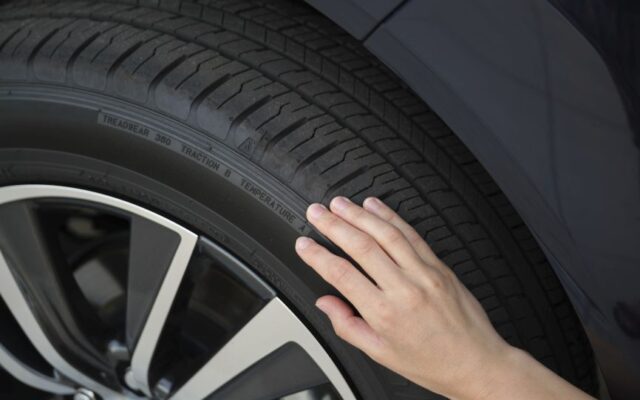
You can check when a tyre was manufactured using the date code on its sidewall. The date appears as four digits at the end of the tyre identification information.
The first two digits are the week and the last two are the year.
For example:
2419 = week 24 of 2019.
That doesn’t mean a tyre automatically becomes unsafe or illegal after a fixed number of years. There’s no blanket age limit for ordinary passenger-car tyres equivalent to the rules applying to certain heavy vehicle tyre positions.
Manufacturer guidance is more useful. Michelin, for example, recommends professional annual inspections once a tyre has been in use for five years and precautionary replacement if it reaches 10 years from its manufacturing date.
For a tyre being sold as new, an older date code is still worth asking about. Find out how it has been stored and whether you’re comfortable buying stock that has already spent several years off the road.
You can also see how ageing rubber starts to crack in our separate guide.
Wrong speed or load rating
The numbers and letters following the tyre size matter.
Take a marking such as:
205/55 R16 91V
The “91” is the load index and the “V” is the speed symbol.
The load index corresponds to the maximum load that each tyre is designed to carry. The speed symbol indicates its approved speed capability under specified conditions.
A replacement tyre needs to be suitable for the vehicle. Don’t choose a lower specification just because the tyre is cheaper.
You can normally find the required or recommended information in the vehicle handbook, manufacturer documentation or the tyre information sticker, often found around the driver’s door area.
If you’re unsure, check before buying rather than assuming that two tyres of the same physical size are interchangeable. Tyres with identical dimensions can still have different load and speed ratings.
Tyres without appropriate approval markings
Approved tyres carry markings showing that they meet relevant regulatory requirements.
For conventional replacement tyres, you’ll commonly see an E or e approval marking on the sidewall, followed by identifying numbers relating to the approval.
There are some regulatory exceptions and alternative approval situations, so the absence of one particular symbol shouldn’t be diagnosed from an internet photo alone.
The practical point is simpler: if you’re being offered an unfamiliar grey-import or unbranded tyre and neither you nor the seller can identify appropriate approval markings or documentation, don’t guess.
Ask the fitter to confirm that the tyre is approved and suitable for road use on your vehicle.
Part worns without proper markings
Part-worn tyres are legal to sell in the UK, but sellers have specific obligations.
For a non-retreaded part-worn tyre, the relevant approval marking must be present and “PART-WORN” must be permanently and legibly applied to the tyre.
The original tread grooves must also be at least 2 mm deep across the full breadth of the tread and around the entire outer circumference when the tyre is supplied.
The detailed requirements are explained by Business Companion.
We’ve also covered the legal requirements for part worn tyres separately, including what to inspect before buying one.
If a seller can’t show you the required markings or the tyre doesn’t meet the condition requirements, walk away.
Badly mismatched tyres across an axle
Different tyre brands on the same car aren’t automatically illegal.
That distinction matters because advice online often goes too far and suggests all four tyres must carry the same badge.
What does matter is compatibility.
Tyres on the same axle need to comply with legal requirements concerning characteristics such as structure and suitability. From a driving point of view, large differences in tread design, remaining tread depth and performance characteristics can also make behaviour less consistent, particularly in poor conditions.
If you’re replacing one tyre, look at what’s already fitted on the opposite side.
Where the remaining tyre is heavily worn, materially different or unsuitable, replacing a pair may make more sense than choosing the cheapest possible single replacement.
Not sure whether the tyres you’ve been quoted are any good? Read us the brand and the numbers off the sidewall and we’ll tell you what you’d actually be getting.
What the independent testing actually shows
This is where the difference between “cheap” and “bad” becomes clearer.
Independent tyre tests regularly find that the spread between products can become much greater in wet conditions than it appears in the dry.
Tyre Reviews has compared large numbers of tyres across wet and dry braking, handling and aquaplaning tests. Its budget tyre comparisons have shown that some inexpensive tyres can remain relatively competitive in dry braking while losing considerably more ground once the road is wet.
Its large 2026 summer braking comparison illustrates another important point: price and brand tier don’t produce a perfectly predictable finishing order. Some lower-priced tyres performed strongly in individual tests, while other products were substantially further behind.
That’s why a blacklist isn’t especially useful.
The lesson for a UK driver is to look closely at the individual tyre’s wet performance rather than assuming all budget products behave alike.
Wet braking is particularly useful because the consequences are easy to understand. A tyre that feels completely normal during a dry commute may show its weaknesses only when you have to stop hard on a wet road.
Aquaplaning resistance and wet handling are worth considering too, especially if you regularly drive at motorway speeds or cover high annual mileage.
For everyday safety checks alongside independent tyre-test results, TyreSafe also provides guidance on checking tread depth and understanding when tyres are approaching the legal limit.
The “cheapest four tyres” trap
Buying the cheapest set available can make sense if the tyres are suitable and perform adequately.
The mistake is looking only at the first invoice.
Imagine one cheaper set wears quickly enough that you need to replace it significantly sooner. You’re then paying for another set of tyres, fitting, balancing and disposal sooner as well.
The useful comparison is cost over the period you’ll actually use the tyre, not simply the price on the day.
That still doesn’t mean you need premium tyres.
For plenty of drivers, the sensible answer is a reputable budget or mid-range tyre in the correct specification, fitted properly and maintained at the right pressure.
A driver covering 4,000 local miles a year has very different priorities from somebody doing 20,000 miles of motorway driving.
Buy for the way you actually use the car.
How to check before you buy
You don’t need specialist tyre knowledge. Run through these six checks:
- Find the brand and model, then check that the manufacturer or brand is traceable.
- Read the four-digit date code and establish when the tyre was manufactured.
- Check the load index and speed rating against the specification suitable for your vehicle.
- Look for the appropriate type-approval markings and ask the fitter if anything is unclear.
- If it’s part worn, check for the required “PART-WORN” marking and sufficient tread. A tyre supplied as part worn needs at least 2 mm across the full breadth of its original tread, while the legal minimum once a car tyre is in use is 1.6 mm across the central three-quarters and around the entire circumference. See the legal tread depth and how to measure it and TyreSafe for more detail.
- Ask what the fitted price includes. Check whether balancing, a valve where required and disposal of the old tyre are included so you can compare quotes properly.
Those six checks tell you far more than a list of supposed “worst tyre brands”.
What we’d suggest instead
If you’re working to a budget, look for a traceable tyre from an established manufacturer or group in the correct specification for your car.
Street Tyres offers affordable options including Matador, Riken and Roadstone.
Matador is part of the Continental Group. Riken is a budget tyre brand owned by the Michelin Group, while Roadstone describes itself as an associated brand produced by Nexen Tire.
That doesn’t mean a cheaper brand automatically performs like the premium manufacturer connected with it. Individual tyre models still need to be judged on their own merits.
The point is that buying budget doesn’t require buying blind.
Buying tyres in Redhill
Street Tyres fits tyres at Holmethorpe Avenue and provides mobile tyre fitting across Redhill, Reigate, Horley and Merstham.
You can check prices for your registration to see tyres suitable for your vehicle and compare the available budget and mid-range options.
If you’re unsure about a brand, tyre age or specification, ask before it’s fitted. A few minutes checking the sidewall can prevent an expensive mistake.
Check prices Find the right tyres for your car Enter your registration for prices on tyres that fit. Fitting at our Redhill workshop or at your door.
FAQs
Are budget tyres dangerous?
Not simply because they’re cheap. Many budget tyres are legitimate, approved products from established manufacturers. The greater differences often appear in wet braking, handling and aquaplaning performance. Check the individual model, correct specification, approval markings and condition rather than judging it purely by price.
How old is too old for a new tyre?
There’s no blanket UK passenger-car rule making an unused tyre illegal at a particular age. Check the manufacturing date and condition before buying older stock. Michelin recommends annual professional checks after five years of use and precautionary replacement at 10 years from the date of manufacture.
What tyre brands should I avoid?
Avoid relying on a blacklist. Individual models from the same manufacturer can perform differently. More useful warning signs include an untraceable manufacturer, questionable approval status, unsuitable load or speed ratings, old stock you aren’t comfortable buying and part-worn tyres that don’t meet the legal sale requirements.
Can I mix tyre brands on the same car?
Yes, different brands can be fitted to the same car in many circumstances. The tyres still need to meet the vehicle’s requirements and legal rules concerning compatibility and construction. Matching tyres on each axle where practical can also help maintain more consistent handling and grip.
Are unbranded tyres legal in the UK?
Being unfamiliar or effectively unbranded isn’t, by itself, the legal test. A tyre still needs to meet the applicable regulatory, marking, specification and condition requirements. If neither you nor the seller can identify the manufacturer, approval status or appropriate markings, choosing a traceable alternative is the safer buying decision.
Tyres in Redhill, fitted in-store or at your door Street Tyres has been fitting tyres in Redhill since 2016, rated 4.8 from 392 Google reviews. Bring your car to our Holmethorpe Avenue centre, or we will come to you across Redhill, Reigate, Horley and Merstham.